R&D · Intelligent Platforms
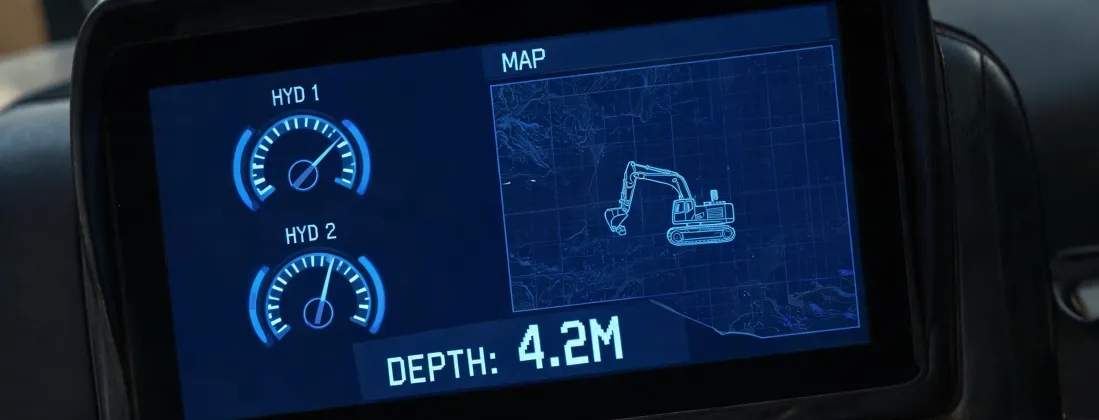
Intelligent hydraulic control · remote IoT monitoring · hybrid powertrains · machine-control interfaces — the technology stack that turns dig cycles into measurable productivity for equipment managers.
Six milestones that map how SANY moved from emission-compliant iron to software-defined dig cycles. Content focuses on hydraulic intelligence and fleet data — not marketing slogans.
Tier 4 Final / EU Stage V engines standardized across crawler excavator lines with DPF/SCR packages documented for tender packs.
Closed-center load-sensing hydraulics with electronic pump control rolled into mid-size excavators for flatter dig cycle variance.
IoT telematics suite live: hour meters, hydraulic temperature, fault codes, and geofenced utilization for fleet managers.
Hybrid assist excavator pilots cut fuel burn on repetitive swing-dig cycles in urban mass excavation trials.
Machine-control interface kits for dig depth and grade targeting integrated with common 3D site models.
Level-4 tele-remote excavator modules for hazardous benches — operator desks relocate off the blast radius.
*Fuel reduction depends on duty cycle, operator technique, and attachment mix; verified on instrumented pilot fleets.
Technology programs are stress-tested with component suppliers, emissions labs, and contractor pilot fleets before they ship in production excavators.
Pump and valve endurance benches validate ISO 4406 cleanliness retention under high-silt return flow.
Tier 4 Final / EU Stage V packages audited against ISO 8178 C1 cycles for tender documentation.
Secure device gateways feed hour meters, fault codes, and geofences into contractor fleet portals.
Open CAN interfaces for dig depth and tilt sensors used on highway and quarry grade work.
Energy storage modules sized for swing recovery without compromising bucket capacity ratings.
Instrument dig cycle variance, fuel burn, and MTTR before a technology package leaves limited release.
Procurement teams often treat undercarriage choice as a brand preference. On SANY fleets it is a worksite math problem — ground pressure (kPa), transfer cost, and dig torque decide which side wins.
Lower ground pressure (typically 35–55 kPa on 20–40 t class machines) keeps the platform stable on soft quarry floors and deep cut faces. Breakout force and digging depth stay usable when the machine sits on spoil that would bog a wheeled unit. Trade-off: road transfers usually need a lowboy; track shoe and sprocket wear accelerates on abrasive haul roads.
Self-propelled road travel cuts float-truck cost on urban drainage and shoulder packages with frequent site hops. Tire flotation helps finished pavement protection. Trade-off: higher ground pressure and less stability on soft berms; wheeled units are the wrong primary iron for continuous mass excavation in wet clay.
SANY application engineers map both options against soil CBR, daily transfer kilometers, and attachment duty before locking a class mix — neither undercarriage is universally preferred.
Intelligent hydraulics and hybrid swing packages do not erase site physics. These limits belong in the tender file beside the load chart and hydraulic flow map.
| Spec | ~30 t crawler class | Unit |
|---|---|---|
| Operating weight | 29,500–32,800 | kg |
| Bucket capacity | 1.2–1.6 | m³ |
| Digging depth | 6,500–7,200 | mm |
| Engine power | 159–173 | kW |
| Hydraulic system pressure | 320–350 | bar |
| Breakout force | 142–168 | kN |
| Ground pressure | 42–52 | kPa |
Verification path: request a worksite demo, hydraulic flow map PDF, and ISO 8178 C1 emissions family pack. Application engineers walk dig cycle, attachment mix, and undercarriage selection with your superintendent before PO release.
Bring your dig cycle data, attachment mix, and emissions constraints. We map hydraulic, telematics, and hybrid options to the class you are specifying.
Request a Technology Briefing Talk to Applications Engineering