Comparing a SANY 215 Excavator, a Mini Excavator OEM, and a Backhoe Supplier: What I Learned
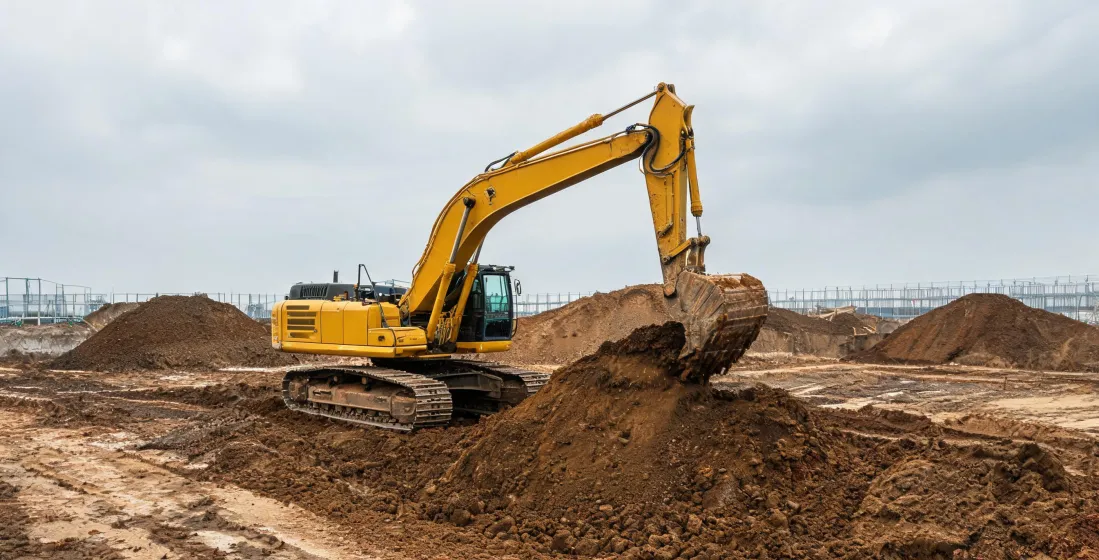
Late September 2025 started with a one-line request from our general superintendent: “Can you look at the SANY 215 excavator quote before I call them back?”
I run the office for a 35-person underground utilities contractor. Daily work means purchase orders, insurance certificates, lien waivers, and whatever equipment paperwork nobody else wants to own. I’m not an equipment specialist. I can’t tell you whether a long-reach boom is right for your ground conditions or whether one hydraulic system is better than another. What I can tell you is how a supplier behaves. When you sit in my chair, you learn that the story a seller tells in a warm conference room is less reliable than the invoice they send in month eight.
In the fall of 2025, all those skills came into play at once. We were evaluating a SANY excavator for our main fleet, considering a compact excavator OEM arrangement, and looking for a backhoe supplier. At first they felt like three separate purchasing decisions. By the end, they were the same question wearing three different coats of paint.
The SANY 215 Excavator for Sale Quote That Started It
Our superintendent had two reasons to put SANY on the list. First, a utility contractor in our area had been running a SANY excavator for about a year and said routine parts had been easy to get. Second, a dealer had just opened a parts-and-service branch about twenty minutes from our shop. For a company that bills by the hour when a machine is in the ground, the distance from support is a bigger factor than the color of the machine.
The dealership sent us spec sheets for a SANY 215 excavator for sale from their current allocation. I read the brochure, but I spent more time on the boring stuff. The dealership’s answers to my boring questions told me more than any horsepower number could:
- Which wearable parts are stocked in the local branch, not the regional warehouse?
- Is the warranty handled by the dealer directly or do we have to call a factory number?
- Who owns the freight claim before the machine is signed for?
- Does the written contract include the parts-support promise made on the sales call?
Those questions don’t prove whether the SANY 215 will handle our soils. They prove what life will look like after the first season, when something wears out and the machine is down on a Friday. For a small contractor, that Friday is the one that makes or breaks the whole purchase.
What I remember most from the sales call was not a performance claim. Our superintendent asked whether the SANY 215 could also do production mass excavation for a larger job we were bidding. The salesperson paused and said: “For ten hours a day of loading trucks, I’d quote you a bigger platform. This machine is set up for mixed trenching and utility work.” That sentence probably cost that dealer some margin that day. It also earned the order. I would rather work with someone who tells me where their equipment fits than someone who tells me it fits everywhere.
The Mini Excavator OEM Side Quest
While the SANY quote was moving through approvals, our owner forwarded an email with the subject line “a mini excavator OEM opportunity.” I read it twice.
I knew the letters “OEM” stood for original equipment manufacturer. In practice, the pitch was less technical. The factory would build compact excavators, put our company’s name on them, and give us a certain territory. For a distributor, that kind of compact excavator OEM deal can be a clean way to build a private-label line. For a contractor, it is a bigger leap. You stop being only the end user and start being the local warranty office.
So when I got to the meeting with the OEM rep, I asked questions that would matter after the machine was in our yard:
- What is the minimum order quantity?
- Which components are standard across the compact line, and which are proprietary?
- Where is the nearest stocked parts location?
- Are electrical and hydraulic diagrams available in English?
- If an OEM-labeled machine has a defect, who answers to the end customer?
None of those questions need a mechanic’s certification. They need a buyer who is willing to look past the unit price. A mini excavator OEM can be a smart route if the numbers work and the support plan is real. In our case, the minimum order made sense for a dealer, but not for a 35-person utility contractor. We tabled the idea.
I’m also okay saying why we tabled it: I don’t have enough experience running a private-label equipment line to take that risk on a handshake. The OEM rep knew the product. I don’t know that part of the business well enough to make a confident call, and I said so. In the end, admitting that boundary was easier than explaining to our owner why I ordered a container of machines we weren’t set up to support.
What to Look For in a Backhoe Supplier
Somewhere in the middle of all that, our shop foreman asked me what to look for in a backhoe supplier. I didn’t answer with a brand list. I told him the same thing I check for every piece of equipment: proof, not promises.
A backhoe-loader spends its working life moving between a front bucket and a digging arm. It works in mud, near curbs, and often in places where a mid-size excavator can’t fit. A fresh coat of paint can make five years of hard work disappear from plain sight. It doesn’t disappear from the maintenance history.
We had two serious backhoe suppliers in front of us last fall. One had a very polished salesperson and a machine that looked great under the yard lights. The other sent us a maintenance history before we asked for it, along with repair photos and part receipts. When we asked the polished supplier for service records, they said, “I think it’s fine,” and never sent anything.
I picked the second supplier. Not because their machine was perfect, but because their paperwork showed they were paying attention. Four months later, a small control valve started leaking. The fix was covered under warranty. It went fast because the service log gave our mechanic a clear starting point. The price difference between the two machines became almost irrelevant.
Lessons From My Side of the Desk
If someone asks me now what to look for in a backhoe supplier, my answer has three parts: prove you know the machine’s history, stock or source parts in reasonable time, and don’t overpromise what you can support. That same answer applies to excavators and every other piece of iron we own.
As for the SANY excavator, we ordered the 215. The delivery arrived in January 2026. The waiting period in between was the part where I questioned myself most. I signed the purchase approval, then immediately wondered whether I had pushed the right people or asked the right questions. What if the dealer’s parts promise disappeared after the sale? What if the first breakdown uncovered a problem no brochure showed? I relaxed only after the dealer did what they said they would do.
One purchase and one OEM evaluation doesn’t make me an equipment-industry expert. If you’re buying machines for a national fleet, your due diligence list will be longer. But I think the pattern is the same: buy from people who can name their limits. The supplier who said “this machine isn’t the right fit for that job” earned more trust than any supplier who claimed to do everything. Do I know enough to pick an engine or an undercarriage? No. That’s not my lane. But I know a supplier who respects their own limits, and that is the supplier I can trust with ours.
Charlotte Avery is an earth-moving machinery analyst covering excavators, mini excavators, loaders, skid steers, dozers, graders, compactors, and attachments. She uses ISO 6165 machine classification and ISO 20474-1 safety requirements while examining operating mass, rated payload, breakout force, ground pressure, stability, visibility, guarding, and attachment compatibility. Her work helps contractors and fleet buyers match machine size, undercarriage, transport limits, and protective features to terrain, duty cycle, and jobsite access.