Why a Single SANY SY80U Order Gets the Same Quality Check as a 40-Unit Fleet
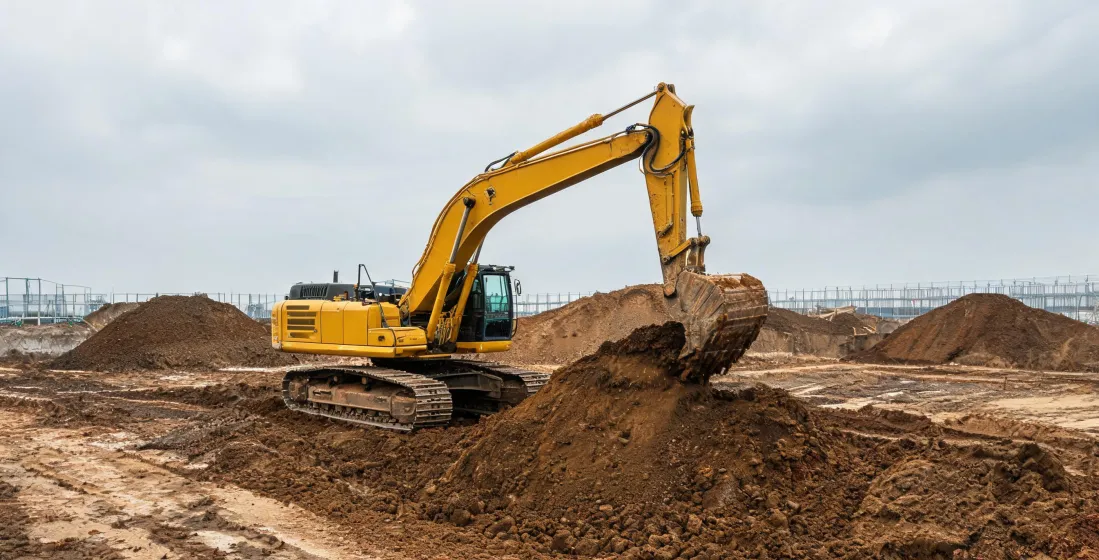
I've held up a one-unit excavator delivery over a paint code mismatch. I'd do it again tomorrow.
Here's the opinion I'm going to defend, and I won't hedge it: small orders deserve exactly the same quality and compliance scrutiny as fleet orders. A single SANY SY80U excavator going to a first-time dealer in a new region is not less important than a 40-unit order going to an established fleet. If a supplier treats them differently, that's not "efficiency." That's a business running on assumptions it hasn't bothered to test.
I handle quality and brand compliance reviews. Every machine, every attachment, every private-label batch I sign off goes through the same checklist before it reaches a customer. On a normal year, that's 200-plus items across dealer and OEM channels. Roughly a third of first deliveries come back with something I want changed—sometimes cosmetic, sometimes not. That number isn't a knock on suppliers. It's just what happens when you actually look instead of trusting the spec sheet.
Compliance requirements don't shrink with your order size
This is the part that gets quietly skipped whenever someone argues "it's only a small order."
Regulatory compliance isn't prorated. If you're moving a SANY excavator into the US market, it has to meet EPA Tier 4 Final standards under 40 CFR Part 1039 whether you're shipping one machine or a hundred. Into Europe, the same logic applies through EU Stage V (Regulation (EU) 2016/1628). Roll-over and falling-object protection has to be certified against ISO 3471 and ISO 3449, and lift capacity has to be rated per ISO 6015 and SAE J1179—for everybody. There is no "small buyer" carve-out in any of those documents.
So when I hear "it's just one unit, don't make it a big deal," my honest reaction is: the regulation doesn't know your order size. Neither does the operator at the controls. Neither does the insurance carrier. A single non-compliant excavator is the same liability as a fleet of forty. In some ways worse—because it's easier to hide, and hiding it is exactly the thing that turns a paperwork problem into a legal one.
The math on a failed small order doesn't favor cutting corners
Let me get concrete about why this matters, because "for excavator compliance requirements" sounds abstract until it hits a P&L.
I once watched a regional dealer nearly lose a customer over a small delivery where the hydraulic spec was off by a few points from what was quoted. The machine ran fine. It just didn't run the way the buyer's crew expected, and their fleet manager caught it within a week. The redo cost the supplier roughly $11,000 in parts, freight, and labor. The dealer almost lost the account anyway—not because of the money, which was the supplier's tab, but because their customer had now been burned on a first order, which is exactly when trust is most fragile.
Looking back, I should have flagged the spec ambiguity before the quote went out. At the time, the difference seemed within normal quoting tolerance, so I let it ride. It wasn't. Now every contract I touch pins down hydraulic flow, breakout force, and rated capacity in writing before anything ships—regardless of order size.
For a large fleet deal, a mistake is annoying. For a small dealer ordering one machine to test a market, a mistake is existential. That asymmetry is exactly why small orders deserve more scrutiny, not less.
The counter-intuitive part: small orders are your best QA signal
Here's what I didn't appreciate until a few years in: small orders fail for the same reasons big orders fail. They just fail cheaper.
A backhoe private label run of five units will surface nearly every process gap a factory has—spec translation, paint match, harness routing, decal placement, documentation completeness. A batch of forty will surface the same gaps, only now the fix costs eight times as much and half the units are already in transit.
I don't have clean industry-wide data on defect rates by order size. I wish I did, because everyone in this business has a pet theory and almost nobody has a number. What I can say anecdotally is that the issues we caught on small first-time orders in 2024 were the exact issues that would've blown up on the fleet contracts we signed six months later. Every defect we found on a five-unit run saved us a harder conversation on the next fifty.
So when a supplier tells me they run a "leaner" QC process on small orders, I don't hear cost-saving. I hear "we don't actually know where our process is weak, and we're about to find out on a big order."
"But full QC on one unit isn't cost-effective"
That's the pushback I get most often, and it deserves a real answer instead of a slogan.
It's true that per-unit inspection cost is higher on a one-machine order than on a forty-machine order. That's just arithmetic. What isn't true is that the correct response is to lower the standard. The correct response is to make the process fixed-cost—build the checklist once, apply it to every order, and let volume amortize it.
Even after we standardized that approach, I kept second-guessing it for about two quarters. What if small dealers saw the extra documentation as friction and went to someone else who promised faster turnaround? I didn't relax until we pulled the retention numbers and saw that first-time buyers from the small-order channel came back at a higher rate than the fleet channel. Same answer three consecutive quarters before I'd believe it.
Here's the reframe that made it click for me: for a small dealer or a new backhoe distributor working with us for the first time, a well-executed first order isn't a transaction—it's a proof of concept. You're not spending QC budget on a one-unit sale. You're spending it on customer acquisition, and the cost per acquisition is often lower than anything your marketing team can buy.
So no, I'm not going to loosen the checklist
Small doesn't mean unimportant. It means unproven—and unproven is exactly the category where quality either wins you a long-term partner or burns a reference you'll never get back.
The vendors I still call first, years later, are the ones who treated my single-machine order the way they treated their largest contract of the year. Not because they were being generous. Because they were consistent. And consistency, in this business, is the only thing that actually scales.
If you're a dealer or a first-time fleet buyer: before you ask about price, ask what a supplier's QC process looks like on a one-unit order. If the answer changes based on volume, walk. If it doesn't, you're probably in the right place.

Claire Dubois is a drilling, foundation, and compressed-air equipment analyst covering drill rigs, piling machines, rock drills, grouting units, and portable air compressors. She uses ISO 11886 commercial specifications for civil and geotechnical drilling and foundation machines, plus ISO 1217 acceptance tests for displacement-compressor flow and power, while examining torque, crowd force, pullback, airflow, pressure, and specific energy. Her guides help engineers match ground conditions, bore method, tool demand, dust control, setup clearance, compressor duty, and transport configuration.