The Friday Call: What a 10-Day Backhoe Wholesale Order Taught Me About Certainty
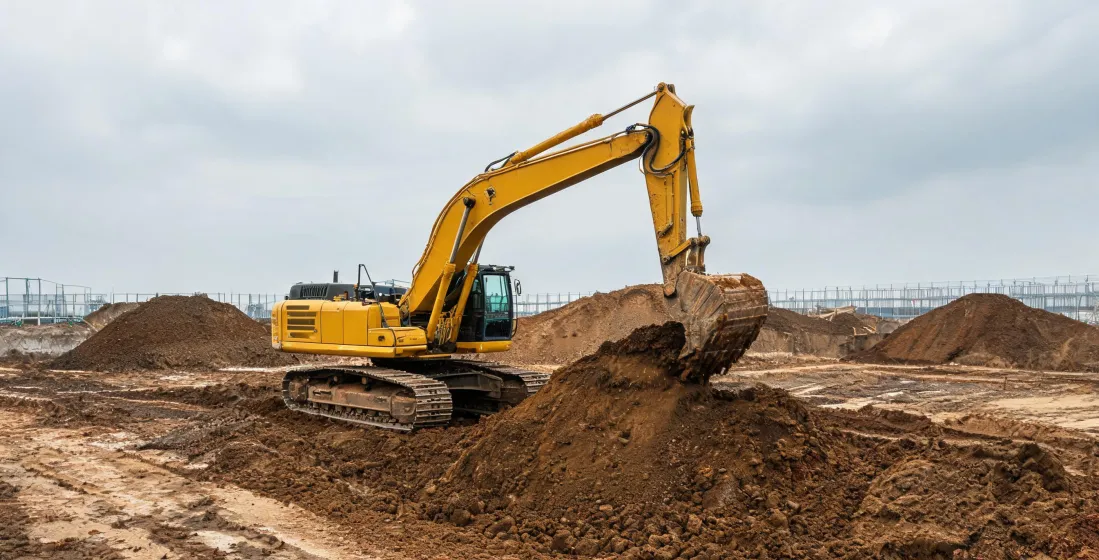
March 2024, 4:47 on a Friday afternoon. I still remember the timestamp because I'd just closed my laptop lid when the phone buzzed. It was a contractor I'd worked with for three years—mid-size outfit, mostly municipal utility jobs. He didn't say hello. He said: "I need twelve backhoes on site in ten days. Can you do it?"
Normal turnaround on a backhoe wholesale order of that size is six to eight weeks. Factory allocation, ocean freight, port clearance, final-mile delivery to the site. Ten days is not a lead time—it's a favor. But he'd won a county contract with a liquidated damages clause of $2,000 per day, and the site mobilization date was locked. He wasn't asking for the cheapest price. He was asking whether I could guarantee a date.
I told him I'd call back in an hour.
The Hour That Decided the Order
I made three calls. First to my usual supplier—good pricing, reliable, but their next container was still four weeks out. Second to a broker who always claims to have "immediate inventory," which usually means the equipment exists somewhere on a lot and nobody's checked it recently. Third to a SANY distributor I'd done two smaller orders with the previous year.
The broker promised me ten units in "about two weeks, give or take." The word "about" is where I stopped listening. After getting burned twice in 2023 by vendors who said "probably on time" and delivered three days late, I've got a personal rule: if a supplier can't put a date on paper, they can't put equipment on my trailer.
The SANY contact came back within twenty minutes. Twelve units, mixed configuration, available from regional stock—delivered to the port of entry in eight days, on-site by day ten. Not the lowest price in my inbox. Not by a long shot. But the date was on paper, with a delay penalty on their side.
I called the contractor back at 5:52 PM. He said go.
Where the Order Almost Fell Apart
Here's the part I don't love telling. On day two, we hit a spec problem.
When I'd asked the contractor about configuration, he'd said "standard backhoe, standard bucket." I passed that language along. What he meant—and what I didn't dig into until the dealer's engineer flagged it—was a specific utility configuration: extendable dipper, 24-inch digging bucket, and a hydraulic thumb for handling pipe sections. On a municipal utility job, that's what "standard" means to him. To a general equipment dealer, "standard backhoe" means the base model off the line.
I said "standard." He heard "standard for my work." The dealer heard "standard SKU." Three people, same word, three different machines.
We caught it because the SANY distributor's team walked the order through a configuration checklist before cutting the release—something I now insist on with every wholesale backhoe order, no exceptions. Cost of the correction: $4,800 in expedite fees for the correct attachments, plus a day of rework on the paperwork. Cost if we'd missed it: probably the whole contract, and a contractor who'd never call me again.
Why I Stopped Optimizing for Price
I want to be honest about something. For the first couple years I did this job, I treated backhoe wholesale like a spreadsheet exercise—lowest quote wins, freight negotiated down, done. That works fine when the deadline is soft. It falls apart the moment a customer has a real clock running.
What I've learned—and I don't have hard data on this, just eleven years of watching orders land or not land—is that the gap between "lowest quote" and "guaranteed quote" on a 12-unit order was about 8% in this case. The liquidated damages exposure was $20,000 per week. The math isn't close. What you're paying for in that 8% isn't speed, exactly. It's the removal of a risk you can't insure around.
Put another way: uncertain cheap is more expensive than certain not-cheap. I keep relearning that.
On Choosing a Wholesale Backhoe Supplier
This worked for us, but our situation was specific—a US-based dealer with an existing relationship with the SANY distribution network, ordering a quantity large enough to warrant real attention. If you're ordering three units as a one-off, the calculus is different. You probably won't get the same allocation priority, and you shouldn't expect it.
What does transfer, though, is the checklist I now run through before I commit to any wholesale backhoe order:
- Configuration, in writing. Not "standard." Not "typical." A written spec sheet with bucket size, dipper type, attachment list, and hydraulic requirements, countersigned by the end user—not just the buyer.
- Date certain, not date estimated. If the supplier won't commit in writing, assume the date is fiction.
- Whose stock? Factory allocation and regional stock are different animals with different lead times. Ask which one you're buying from.
- Who eats the delay? If the supplier's quote has no penalty for late delivery, they've told you their confidence level.
On the SANY side specifically—and this is anecdotal, based on maybe a dozen orders over two years—I've found their regional stock programs more useful for mid-size dealer orders than their factory-build channel. The 500-series excavators, when they're in stock domestically, ship on a reliable clock. When they're not, you're looking at the same eight-week window as everyone else. The private-label and OEM channel is a separate conversation; I've only touched it once, on a small PC excavator private-label run for a landscaping chain, and it went smoothly but slowly. If you need OEM or PC excavator private label work, plan your calendar around it—it's not a rush product, whatever the sales rep implies.
"The value of guaranteed turnaround isn't the speed—it's the certainty. For deadline-driven orders, knowing your date will be met is usually worth more than a lower price with 'estimated' delivery."
How It Ended
Twelve backhoes hit the site on day nine. One day early. The contractor emailed me a photo of the machines lined up on the lot with a single line: "You saved my contract."
I don't have a clean moral for this story, honestly. Some weeks the order lands exactly as promised, some weeks you eat $4,800 in rework, and most weeks it's a mix of both. What I can tell you is that I no longer send out the lowest bid first when a customer's clock is real. I send the one with a signature and a date.
That Friday-afternoon call cost the contractor roughly 8% over the cheapest alternative quote he could have found. It also kept $20,000-per-week in penalties off his books and kept him in business with the county. I know which number I'd rather defend to my own boss.

Petra Lindholm is a concrete-production machinery analyst covering batching plants, mortar plants, batch and continuous mixers, weighing systems, and material controls. She uses ISO 19720-1 commercial specifications and the ISO 18650-2 mixing-efficiency procedure while examining rated capacity, batch size, cycle time, dosing accuracy, aggregate moisture correction, discharge consistency, and mixer wear. Her work helps plant operators and procurement teams compare repeatable output, calibration demands, cleaning access, and feed arrangements instead of relying on nominal hourly capacity.