How a Wrong Excavator Delivery Taught Me to Evaluate Backhoe Manufacturers
-
How an Office Administrator Inherited Equipment Purchasing
-
What I Learned About Excavators and Backhoe Manufacturers
-
The Excavator Private Label Question
-
How I Evaluate a Manufacturer Now: The SANY Example
-
The Result: A SANY Excavator in Our Fleet
-
The Checklist I Give to Anyone Evaluating Backhoe Manufacturers
-
Final Thoughts: Education Makes the Difference
The delivery truck pulled into our yard on a Tuesday in February 2024. The driver handed me a bill of lading. Model number checked out. Serial number matched the purchase order. But when I walked around to the back of the trailer, my stomach dropped.
The bucket was wrong. The coupler was wrong. And the machine was a longer configuration than what we'd quoted.
I grabbed the spec sheet and compared it to the unit tag.
Not even close.
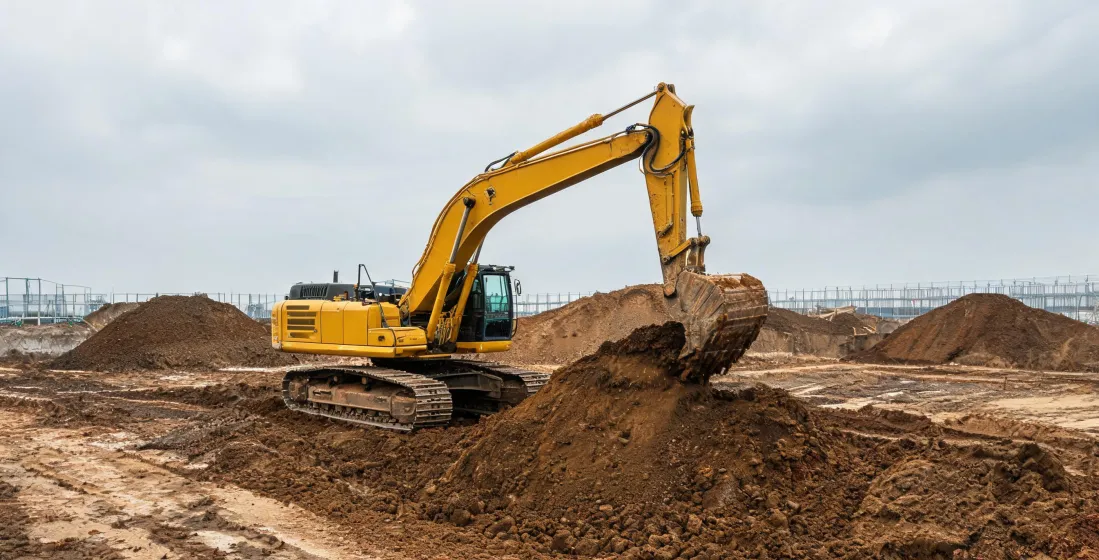
That delivery mistake set us back three weeks, cost $4,300 in return freight, and produced a conversation with my CFO that I'd rather not repeat. But it also changed how I think about evaluating excavator and backhoe manufacturers. Here's the story of how an office administrator who knew nothing about construction equipment built a vetting process—and why SANY excavators ended up in our fleet.
How an Office Administrator Inherited Equipment Purchasing
Quick background: I'm the office administrator for a 90-person civil construction company. I manage all equipment and supply ordering—roughly $900,000 annually across about a dozen vendors. I report to both operations and finance.
When our equipment buyer retired in 2021, the responsibilities landed on my desk. Nobody asked if I knew the difference between an excavator and a backhoe.
I didn't.
My first two equipment orders relied entirely on dealer recommendations. I called three local suppliers, asked for quotes on "a good excavator," and picked the middle-priced option. Classic rookie move. The machines worked, but I had zero ability to verify whether I was getting the right configuration or a fair deal.
Then came the February 2024 delivery. It wasn't just the wrong attachments. The dealer's sales rep had been responsive during the quote phase, but the fulfillment side was a mess. Nobody flagged that the shipment was split. The operator's manual was missing. Getting a straight answer from anyone at the dealership took days.
I spent six weeks coordinating returns, chasing paperwork, and reordering the correct attachments. The project schedule slipped. Clients noticed. My VP noticed.
That was the turning point. I stopped treating equipment purchases like office supply orders and started learning the industry for real.
What I Learned About Excavators and Backhoe Manufacturers
First, the basics. "Excavator" is not one product category. It's a range from mini units under 2 tons to heavy machines over 80 tons. The global excavator market is the largest single segment in construction equipment, accounting for roughly 30% of industry unit sales (Source: Off-Highway Research, 2024). That scale means a wide variety of manufacturers—from long-established global brands to Chinese manufacturers like SANY, XCMG, and Liugong.
People usually compare excavators by operating weight, bucket capacity, digging depth, and engine power. But those specs tell only part of the story. Two machines with identical spec sheets can feel completely different on a job site. Hydraulic responsiveness, build quality, parts availability, dealer support—those are the real differentiators, and they don't appear in a brochure.
I also learned about a concept I'd never encountered: excavator private label.
The Excavator Private Label Question
A private label excavator is a machine manufactured by one company and sold under another brand. It's a legitimate and fairly common model. Some Western brands source certain models from factories in China or India. Regional dealers can own branded machines produced under contract. Even SANY, one of the largest construction equipment manufacturers in the world, has pursued private label and OEM collaboration in various markets as part of its B2B strategy.
When I first heard about this, I was somewhat skeptical. The whole point of buying a brand-name machine is the brand, right?
Turns out, it's more nuanced. What you're actually paying for is engineering, quality control, parts supply, and after-sales support. If a private label arrangement includes all four, the name painted on the side matters less than you'd think. But if a dealer slaps its name on a machine from an unknown factory with no parts commitment, you've bought an expensive problem.
The key question isn't "What brand is it?" It's "Who actually manufactures this machine, and who's responsible when it breaks?"
How I Evaluate a Manufacturer Now: The SANY Example
After the delivery disaster, I built a manufacturer evaluation process. To be open about limits: my experience is based on roughly 40 equipment orders over four years, all in the mid-size range. If you're a national contractor buying hundreds of units, you'll need more rigor. But for companies like ours, this process worked.
Step 1: Call the references—actually call them. When a regional SANY dealer offered references for SANY backhoe and excavator buyers, I contacted all three. Two had been running SANY machines for over a year. The most valuable question wasn't about machine performance—it was about response speed. When you order parts, what happens? How long before a technician arrives?
Step 2: Verify who makes the machine. For any private label offer, I trace the actual manufacturing source. SANY publicly lists its major manufacturing facilities—including plants in China, Brazil, India, and assembly operations in additional regions (Source: SANY Group corporate information, sanyglobal.com, accessed January 2026). If a dealer can't identify the factory, I walk.
Step 3: Put every specification in writing. February 2024 happened because too much was verbal. Now I send a detailed spec sheet—bucket size, coupler type, hydraulic flow, boom configuration, overall dimensions—and require the dealer to approve it before any deposit. That one change eliminates most of the "oops, we thought you meant the other configuration" conversations.
Step 4: Test the parts supply chain. An excavator is only as good as its parts network. In early 2025, we needed attachment parts for a SANY backhoe loader. The local distributor had them at a regional center, and we received them in three days. That told me more about SANY's dealer network than any performance stat.
Step 5: See the machine in person before you sign. We sent our lead mechanic and me to a regional dealer event in late 2024. We climbed over the SANY SY135C, exercised the hydraulics, and spent thirty minutes with the service manager. A dealer that puts a machine in front of you is usually confident in it.
The Result: A SANY Excavator in Our Fleet
We added a SANY SY135C—a 13-ton class excavator—in December 2024. About 16 months later, it's still working steadily on residential and light commercial projects. Maintenance has stayed within forecast. The local distributor has been responsive. So glad I scheduled that in-person inspection. I almost ordered sight-unseen from the quote, which would have delivered the standard quick-coupler configuration instead of the one our crew uses.
Honestly, I'm still not sure why some dealers resist putting spec details in writing. My best guess is they want flexibility to swap configurations after the sale. For us, written, itemized quotes are non-negotiable.
I'll also concede that private label deals carry more risk than buying directly from an established manufacturer. To be fair, they can work well—for the right buyer, a private label excavator offers real savings. But the vetting bar needs to be higher because there's an extra layer between the plant and your project site. We nearly signed a private label deal in January 2025, but a bit of research revealed the brand had no listed manufacturing facility. The dealer vaguely mentioned a partner factory "somewhere in East Asia." We walked away. Dodged a bullet.
The Checklist I Give to Anyone Evaluating Backhoe Manufacturers
Whether you're looking at SANY excavators, a private label arrangement, or a more traditional brand, the same questions apply. Here's the checklist I wish I'd had in 2021:
- Manufacturing clarity. Who builds the machine and where? If the answer is vague, treat it as a red flag.
- Parts and service infrastructure. Find the nearest distribution point and ask to see actual parts stock, not a brochure.
- Written, itemized quotes. Every attachment, every configuration detail, in writing, before any payment.
- Verifiable references. Talk to operators of the exact model you're considering. Ask about dealer response speed first.
- Warranty exclusions. Read the fine print for hydraulics, electronics, and undercarriage coverage.
- Resale reality. Less-established brands hold different value over time. SANY's resale market has improved meaningfully as its installed base grows, but it's not at legacy-brand levels yet.
Final Thoughts: Education Makes the Difference
An informed customer asks better questions and makes faster decisions. I used to roll my eyes at lines like that. After three years of equipment purchasing, I believe it.
I'd rather spend 10 minutes explaining how to evaluate a manufacturer than deal with mismatched expectations after a delivery. Every time I share this framework with a colleague, someone tells me it saved them from a similar mistake. That's why I wrote this—not to push SANY, but to give you a process that works for any excavator or backhoe manufacturer.
Check the specs. Verify the supply chain. Test the service network. Ask the hard questions.
Then make the call. Done.
Charlotte Avery is an earth-moving machinery analyst covering excavators, mini excavators, loaders, skid steers, dozers, graders, compactors, and attachments. She uses ISO 6165 machine classification and ISO 20474-1 safety requirements while examining operating mass, rated payload, breakout force, ground pressure, stability, visibility, guarding, and attachment compatibility. Her work helps contractors and fleet buyers match machine size, undercarriage, transport limits, and protective features to terrain, duty cycle, and jobsite access.