SANY Dealer vs. Direct OEM: Which Route Gets You an Excavator Faster?
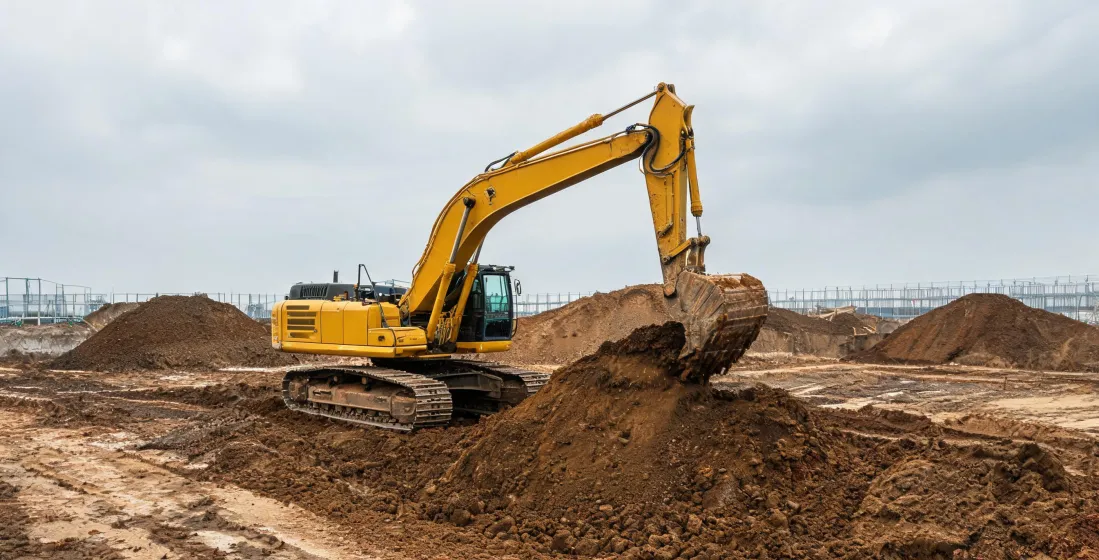
It starts with a phone call. On a Tuesday morning, a paving contractor's excavator loses hydraulic pressure on a municipal job with a $20,000-a-week penalty clause. A rental fleet in Georgia needs a wheel excavator replaced before a holiday weekend. A distributor in Texas learns their private-label compact excavator supply chain is 18 weeks out. These are the calls I get.
Last year, a rental fleet called about a different kind of emergency: two compact units had been damaged in an electrical fire, and they had a weekend contract to fill—36 hours, not 36 days. We found two in-stock SANY SY60Cs at a dealership three states away, arranged transport, and had both machines on site by Friday afternoon. The factory order quote we got for the same specification was nine weeks out.
For seven years, I've coordinated equipment sourcing on tight deadlines—45+ rush orders ranging from single compact excavator replacements to eight-unit private-label fleet deliveries. I'm not a SANY sales rep or a dealer employee. I'm the person who has to make one of two routes work when 'I need it yesterday' is a literal requirement:
Route A — SANY dealer network: buying a SANY-branded machine from a dealer with local stock, paperwork handling, and after-sale support.
Route B — OEM direct / private-label: sourcing factory-direct through SANY's OEM program, often under your own brand, at wholesale pricing that comes with more responsibility.
Both routes get machines into the field. Both fail in different ways. Here's how they compare across four dimensions that matter most under deadline pressure. If you're in a true emergency right now, jump to the scenario list at the end. If you have days to decide, read the whole thing—the obvious choice is often the wrong one.
Dimension 1 — Lead Time: Physical Stock vs. Factory Build Slot
For emergency buyers, this is the only dimension that matters: how fast can a machine be working on your job site?
The dealer route wins on pure speed when stock is on hand. A SANY excavator like the SY60C or SY75C sitting on a dealer lot can be prepped, delivered, and digging within days. No factory anywhere beats a machine that already exists. In November 2025, a client had a crew idle on a sidewalk job because their tracked compact unit was down for a pump replacement. Two dealers within 150 miles had the exact model in stock. We negotiated a bucket inclusion, completed a weekend attachment install, and the client was back on the job Tuesday morning.
The OEM route is a different animal—you're buying from a production queue. Standard factory builds in 2025 were running four to eight weeks depending on model and configuration. Private-label or heavily customized units? Ten to twelve weeks, sometimes more. A build slot will not beat a dealer's in-stock unit in a true emergency. That's not a knock on the factory; it's the reality of building to order.
But here's the part dealer salespeople won't tell you: for repeat orders of standardized machines, an established OEM relationship with a good ordering process can actually be faster than a dealer who has to request stock, arrange transport, prep the unit, and deliver. Dealer inventory is finite. I've watched dealers quote six to eight weeks on a machine they didn't actually have in the lot, while the same configuration on a direct order—digital configurator, pre-agreed spec, payment terms already on file—was on the water in four.
The takeaway: in a genuine emergency, dealer stock wins, period. But the assumption that 'buying direct means faster' only holds when the machine is standardized, your order is repeatable, and the factory process is efficient. (Should mention: an inefficient OEM process creates its own delays. We lost nine days on a 2024 order because payment terms hadn't been finalized. That's nine days the dealer route would have finished the job.)
Dimension 2 — Customization: Catalog Machine vs. Built for Your Brand
If you need a standard SANY-branded excavator, the dealer route is perfectly adequate. You pick from available configurations—canopy or cab, standard buckets, maybe dealer-installed thumbs or quick couplers. That covers most contractors and rental fleets. Nothing wrong with it.
But if you're a distributor evaluating a wheel excavator line to put your own brand on, the dealer route hits a ceiling. Dealers sell catalog models. They don't factory-paint machines in your colors, badge them with your logo, or configure hydraulics for your region's specific needs. That's what direct OEM programs exist for.
Private-label manufacturing means the machine carries your brand, your paint, your warranty handling. For a wheel excavator distributor, that's how you differentiate in a market where multiple companies import similar machines under different names. It's how your product line becomes worth buying from you specifically.
The trade-off: private label comes with minimum order quantities and a much longer planning horizon. You're not making a one-off purchase; you're committing to a supply relationship. I've seen distributors treat private label as a spot-buy tactic and get burned by lead times they didn't plan for.
For dealers and distributors looking for an excavator OEM partner, the private-label decision is strategic, not tactical. If your goal is a controlled spec or a brand you own, the dealer route is off the table. You need the OEM. The only question is whether you're ready for the commitment.
Dimension 3 — Compliance: Who Owns the Paperwork?
This is the dimension that catches everyone off guard, because nobody thinks about it until the machine is on the water or sitting at the dealer's counter.
In the U.S., compact excavator compliance requirements are not optional. Machines must meet EPA Tier 4 Final emission standards for non-road diesel engines above 25 horsepower—which includes nearly every excavator from mini to mid-size. California adds CARB requirements on top of that. These are legal obligations, and the paperwork follows the machine for its entire working life.
With a dealer purchase, the dealer typically handles the title, the emissions certificate, and serial number verification. That's standard dealer service, usually included. With OEM direct or private-label, the factory provides technical documentation, but you own the compliance process. You verify each unit's EPA certification against its engine serial number. You maintain records for resale. If part of your fleet operates in California, you track CARB status too. Distributors expect this, but first-time OEM buyers routinely underestimate the work.
Evidence of compliance isn't a single piece of paper. A typical package includes the EPA Certificate of Conformity for the engine family, the machine's emissions label data, a bill of sale with matching VIN, and import documentation if the unit crossed a border. Missing any one of those can stall registration.
One thing I've learned the hard way: the spec sheet is the cheapest liability insurance you'll ever buy. We had a close call in 2023 when a unit's emissions paperwork didn't match the machine's serial number (ugh). Three weeks of re-inspections and legal fire drills followed. The paperwork had to be correct before the unit left the factory—not after.
There's also a federal advertising angle. Per FTC guidelines (ftc.gov), any performance or environmental claim you make as a seller—fuel consumption, emissions class, uptime—must be truthful, substantiated with evidence, and clear in scope. When you private-label a machine, that advertiser liability becomes yours. The OEM's technical spec sheet is your evidence base. If your product listing says 'Tier 4 Final' and the machine isn't, that's not just a marketing mistake; it's a regulatory one.
Per FTC business guidance on advertising (ftc.gov): claims must be truthful and not misleading, substantiated with evidence, and clear about what they promise. That's a liability rule, not a marketing tip.
The surprise? The dealer route doesn't always make compliance easier. Some dealers hand you the emissions certificate and registration forms and say 'you handle the rest.' We've reviewed dealer machines with sloppy paperwork—titles with errors, missing attachment documentation. What actually separates easy from painful is whether the documentation is complete and organized. Take whichever route—dealer or OEM—gives you cleaner records.
Dimension 4 — Cost: Retail Margin vs. Wholesale Price (and Hidden Overhead)
The predictable part first: for repeat purchases, OEM direct has a lower per-unit price than a dealer. That's the retail-versus-wholesale spread. It's real, it's often significant, and it's the main reason established distributors eventually go direct.
But.
Buying from the factory includes costs that are easy to ignore: freight to your yard, customs clearance for international shipments, supplier financing or letters of credit, inspection time, and your own internal hours for regulatory records and parts planning. I've seen a distributor save 11% per unit on an eight-machine order—then spend 6% of those savings on freight and expediting because a payment delay pushed production back three weeks.
Figure an average of 15 to 20 hours of internal time per unit for compliance records, quality inspection, and accessory planning on an OEM-direct order. That's time your existing staff does not have if you're running a lean operation.
The dealer side is simpler on paper: you pay the quote, you get the machine. The price includes the dealer's margin, but it also covers their risk of carrying inventory and the service relationship that backs the machine. When it breaks, you have a local number to call.
My experience here is based on roughly 30 mid-scale sourcing orders in North America. If your operation is in Europe, Africa, or Southeast Asia, your numbers will look different. This is also accurate as of Q1 2026—factory pricing, freight rates, and tariffs shift, so verify current costs before you budget.
The realistic conclusion: if you're moving just a few machines a year, the dealer margin isn't your biggest problem. Downtime, parts availability, and service response are bigger risks, and dealer relationships cover those. If you're moving dozens per year, the OEM savings compound—but only if you manage the overhead efficiently.
So Which Route Do You Pick?
Stop looking for a universal 'better.' Look at your actual situation:
- True emergency — machine down, crew idle, penalty clause ticking. Dealer with physical stock, period. A build slot can't help you this week.
- Planned fleet expansion — 4+ weeks of lead time available. Compare both, and include your internal overhead in the math.
- Private-label line — wheel excavators or compact class under your own brand. OEM direct is the only route. Start planning long before you need the units.
- First-time buyer — one or two machines. Use the dealer. The warranty, orientation, and local support are worth more than the margin you'd save.
- Established distributor — OEM direct, but invest in a digital ordering and tracking process so repeat orders take the shortest path from spec to ship.
After seven years of managing time-critical equipment delivery, here's what I actually believe: the fastest route isn't determined by whether a dealer sits in the middle. It's determined by which of the two options runs the more efficient process. The best dealer I know has real-time inventory visibility across three states and can locate a machine faster than you can open a spreadsheet. The best OEM program I've worked with locked specs, compliance documents, and payment terms in 72 hours through a digital configurator. Both beat slower operations that carried the same title on paper. At least, that's been my experience with deadline-driven buyers in construction and rental.
Efficiency is the competitive edge. Measure both routes on it, and you'll rarely regret the decision.

Charlotte Avery is an earth-moving machinery analyst covering excavators, mini excavators, loaders, skid steers, dozers, graders, compactors, and attachments. She uses ISO 6165 machine classification and ISO 20474-1 safety requirements while examining operating mass, rated payload, breakout force, ground pressure, stability, visibility, guarding, and attachment compatibility. Her work helps contractors and fleet buyers match machine size, undercarriage, transport limits, and protective features to terrain, duty cycle, and jobsite access.