SANY vs. Established Global Excavator Brands: A Procurement Manager's Total-Cost Comparison
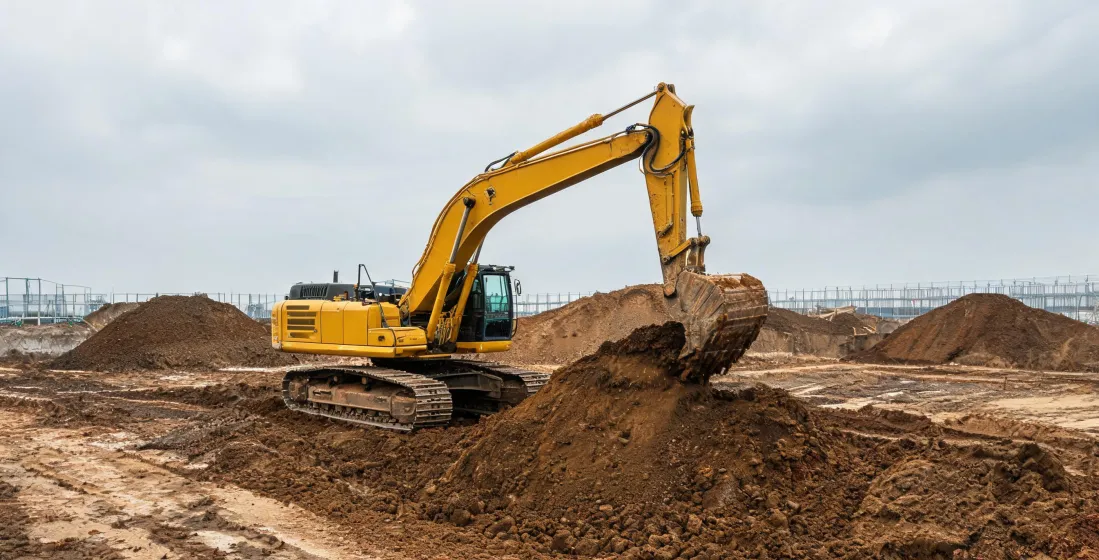
I've spent the last six years buying heavy equipment for a distributor that moves excavation machines into two regional markets. In that time, I've compared hundreds of quotes for excavators, loaders, and backhoe loaders for wholesale supply. My early assumption was simple: the cheapest price wins. Then a 2022 batch order taught me otherwise. We bought a dozen machines from a legacy brand because the base price was aggressive, but we hadn't modeled the carry cost of slow-moving inventory or the part delays that followed. That mistake cost us roughly $15,000 in rework and idle assets—before tax.
Since then, I've built a structured comparison process. This article pits two common procurement routes against each other: buying from established global manufacturers, and buying from a Chinese manufacturer like SANY via a bulk China excavator order. If you're a distributor or a fleet owner, here's how these options compare across the four factors that matter most to a cost-controller: total cost of ownership, customization flexibility, support coordination, and preventive quality control.
1. Total Cost of Ownership: The Sticker Price War Is a Trap
Let's start with the obvious difference. In most cases, there's a 10% to 25% gap between the quoted price of a comparable SANY excavator and a legacy brand. I've seen that spread in bids for a 21-ton class excavator. But the sticker price is only the first payment.
Look at the five-year cost picture. Legacy brands often hold stronger resale values, especially in North America and Europe. SANY's depreciation curve depends heavily on your local brand recognition and dealer network. In markets where SANY already has a strong installed base, the resale gap shrinks. Where it's still an imported brand, you'll eat more depreciation.
Then there's the parts side. SANY excavator parts are often cheaper than their European or Japanese equivalents, but availability depends on your region. If you have a direct factory parts account, lead times can be excellent. If you're hunting for third-party options, you may wait longer. On maintenance, I've found that both types of machines need similar hourly service intervals in the 15-30 ton class. The real cost difference comes from downtime. A flooded cylinder in a legacy brand can cost the same as three months of premium service on a Chinese-made machine—if the part has to ship overseas.
Here's the counterintuitive part: in our fleet, the SANY units have lower average repair costs per operating hour across the first 2,000 hours than two legacy models we own. But that's because we're careful about pre-delivery setup and operator training. If you treat a SANY excavator like an expensive tool rather than a disposable commodity, the TCO difference gets interesting.
2. Customization and OEM Flexibility: Where Chinese OEMs Shine
Legacy global brands are good at producing standardized machines at scale. Try asking a legacy factory to paint a loader in your corporate colors, put a private-label badge on the boom, or modify the cab layout for your local safety standards, and you'll usually get a blank stare. That's a problem if your entire business model is building a regional brand for contractors who want one supplier to own the full service experience.
SANY's OEM and private-label programs are a real advantage. For an excavator distributor, the ability to spec a machine with your name on it—and have it manufactured that way from the start—changes the conversation with customers. It transforms you from a reseller into a manufacturer's partner.
I learned that lesson through a communication failure. In 2023, I wrote “standard configuration” in an order for 15 backhoe loaders, meaning the base model with all factory safety features. The factory understood it as “without additional sound dampening.” Discovered the mismatch only after the units arrived. That's on me—I didn't confirm the exact options in the spec sheet. Now every order has a signed configuration checklist, and this checklist applies whether we buy from SANY or any other brand. Prevention, not cure.
3. Support Coordination: Factory Direct vs. Dealer Network
Legacy manufacturers have extensive dealer networks. If you're in a remote mining area, that's critical. There's almost always a dealer within a few hundred miles. SANY has been building its global dealer network, but it's not yet universal. In some regions, you're dealing with a local importer; in others, you have direct access to the SANY export team.
For bulk purchases—say, 20 excavators in one order—the factory direct relationship is a hidden advantage. You're not negotiating through a dealer who has to mark up parts and services. You're working directly with people who control production slots and spare parts allocations. That shortens the feedback loop for technical questions and warranty claims. Since SANY is listed on the Shanghai Stock Exchange (SSE: 600031), their financial disclosures give a level of transparency you don't always get from private OEMs.
The trade-off? With legacy brands, you often get faster in-person service because the dealer has local technicians. With SANY, you might get a video call with the factory engineer and a shipped part within 48 hours—which can be just as effective if your own maintenance team is competent. In our case, we've relied on a central parts hub for SANY excavator parts, and the response time has been comparable to a local legacy dealer after the first year.
4. Preventive Quality Control: The Dimension Most Buyers Overlook
Everyone worries about the quality gap. I did too. My initial assumption was that “bulk China excavator” meant lower-grade steel and sloppy assembly. After coordinating third-party inspections on more than 30 units, I've changed my mind. The basic work—weld quality, hydraulic hose routing, engine interface—is far better than I expected. Many SANY machines use global components: main pumps from Kawasaki or Bosch, engines from Cummins or Isuzu, control systems from Rexroth. That's not an excuse; it's a fact.
But the finish details are where cost containment matters. Cheap fasteners, less durable decals, and inconsistent seam sealer can turn into expensive punch-list items. That's why preventive inspection is essential. I now budget for a factory or port inspection before payment. An inspector with a 20-point checklist can catch mismatched bucket pins, missing grease fittings, or a wiring harness that chafes against the frame. That type of error, caught early, costs $500 to fix. Missed during pre-shipment, it costs $5,000 in demo days and freight.
If you're asking how to choose a backhoe for wholesale supply, the answer is the same: verify the spec sheet against the actual unit, and don't skip the walkaround. The 10 minutes you spend checking the pin retention and hydraulic hoses can save a 10-week warranty dispute.
So Which One Should You Choose?
Here's my honest, non-dramatic conclusion. If you're a distributor in a market where SANY has an established parts network and you need OEM branding to stand out, the numbers usually favor a bulk China excavator order from SANY. The combination of lower upfront cost, customization flexibility, and direct factory support is tough to beat for growing a brand.
If you're running a stationary fleet in a remote site with no backup equipment, and uptime is everything, a legacy brand with a strong local dealer might still be the safer bet. But run the TCO first. That “safe” legacy premium can become a heavy cost if you pay for dealer trucks to drive 400 miles for a routine service call.
My final piece of advice comes from six years of watching good deals go bad: the cheapest quote and the best reputation both lose to a rigorous checklist. Build your TCO model, put every specification in writing, and inspect before you pay. That's the prevention mindset—and it's what actually saves you money.

Charlotte Avery is an earth-moving machinery analyst covering excavators, mini excavators, loaders, skid steers, dozers, graders, compactors, and attachments. She uses ISO 6165 machine classification and ISO 20474-1 safety requirements while examining operating mass, rated payload, breakout force, ground pressure, stability, visibility, guarding, and attachment compatibility. Her work helps contractors and fleet buyers match machine size, undercarriage, transport limits, and protective features to terrain, duty cycle, and jobsite access.