The Excavator Specification Guide: What Spec Sheets Don't Tell You
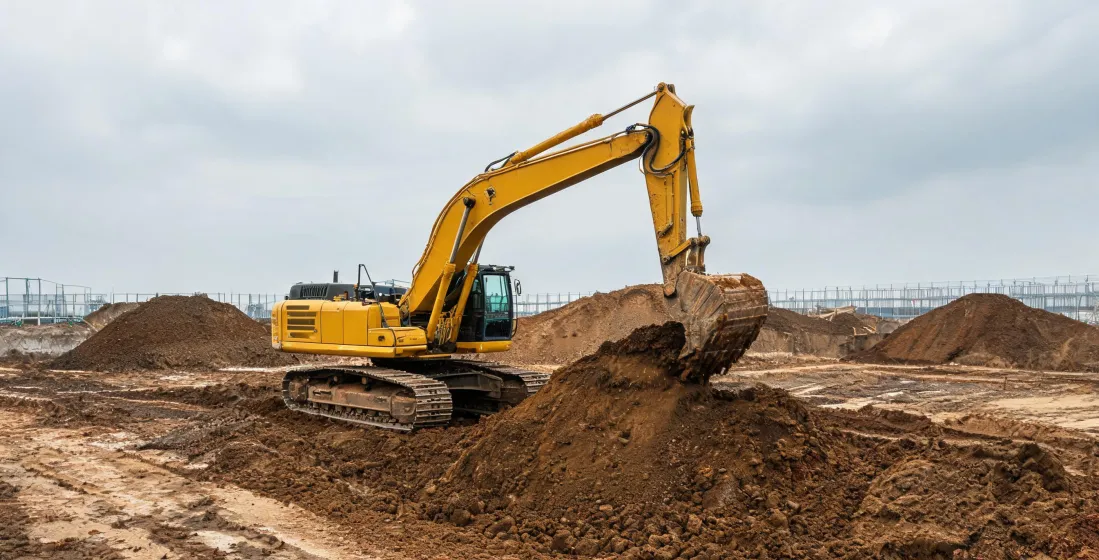
If you've ever compared two 20-ton excavator spec sheets from different manufacturers, you know that feeling. The operating weights are close. The bucket capacities look nearly identical. The digging forces are within a few percent of each other. Yet the price gap can be $20,000 or more.
That's not an accident. It's also not a conspiracy. It's a result of how spec sheets get written—and what gets left out.
A quick intro: I'm a quality compliance manager at a construction equipment manufacturer. Every spec sheet that goes to dealers and customers crosses my desk first. That's roughly 200 documents a year, from compact excavators to 80-ton crawlers. I've rejected about 15% of first-draft spec sheets in 2025 because the numbers didn't match the machines we were actually building. So when I tell you spec sheets are incomplete, I have the receipts.
The Real Problem: Spec Sheets Are Marketing Documents
People assume spec sheets are technical blueprints. The reality is different: they're sales tools with engineering-looking numbers on them.
To be fair, most manufacturers aren't trying to fool you. But there's pressure to make numbers land in a competitive range, and that pressure shapes how specs get written and which numbers get featured. Variables like bucket rating standards, configuration choices, and test conditions all impact the final numbers—and none of those are obvious on the first page.
From the outside, it looks like every manufacturer measures machines the same way. What you don't see is how much interpretation goes into a "standard" spec. When you compare across brands, those differences cut deep.
The Four Biggest Gaps in Every Excavator Spec Sheet
After years of reviewing spec sheets, these are the four most consistent problem areas.
1. Operating Weight Is a Moving Target
The operating weight on a spec sheet assumes a specific configuration. Usually full fuel, a standard bucket, and factory tracks. Change any of those—add a quick coupler, upgrade to heavy-duty track shoes, spec a larger bucket—and the weight shifts.
On a 20-ton machine, configuration differences can move the operating weight by 1.5 to 2.5 tons. That's not a rounding error. It affects transport permits, trailer capacity, ground pressure, and job site mobilization. I've seen buyers spec a machine from the brochure weight, then discover their lowboy trailer isn't rated for the machine that actually arrived.
2. Bucket Capacity: Are You Comparing Apples to Oranges?
Bucket capacity looks straightforward. It isn't. There are two measurement standards you'll encounter: SAE struck and SAE heaped (CECE is another variant in European markets). SAE heaped capacity measures the volume with material piled above the lip at a defined angle of repose. SAE struck measures level-full. Depending on bucket geometry, the gap can reach 10–15%.
Per SAE J296—the standard behind these ratings—both are legitimate. They're only comparable if you're consistent across machines. When comparing a SANY excavator to another brand, check which standard each spec uses. Otherwise you're comparing a bucket that holds 1.2 cubic yards against one that actually holds 1.05.
3. Attachment Compatibility: The Silent Budget Killer
If you're shopping for sany excavator attachments (or any brand's attachments), the spec sheet alone won't tell you whether they'll fit. Attachments connect using pin diameter, pin spacing, and hydraulic flow requirements. Two excavators in the same weight class can have completely different pin configurations.
The result? You might need new mounting brackets, a different quick coupler, or a hydraulic adjustment. These costs never appear on the machine spec sheet. They show up later, at the attachment dealer's counter.
This is why many fleet owners standardize on a single brand. Matching pin sizes and hydraulic specs across a fleet means attachments rotate freely between machines. One fleet customer told me standardization saved them about $18,000 in redundant attachment brackets. That's real money.
4. Hydraulic Specs Don't Reflect Real Performance
Here's the one that trips up even experienced buyers: hydraulic numbers. Machine A shows 350 bar pressure and 230 L/min flow. Machine B shows 340 bar and 220 L/min. Machine A wins on paper. But actual digging performance depends on how the engine and pumps are matched, how the swing circuit prioritizes flow, and how the system behaves under variable loads. None of that appears on a spec sheet.
I've watched a machine with "lower" specs beat its "superior" rival in back-to-back cycle time tests. And I've seen the reverse. The hydraulic section of a spec sheet is a thumbnail sketch, not a performance guarantee.
What Happens When You Trust Spec Sheets Too Literally
I didn't always check configuration details carefully. I only started after getting burned in 2023. A customer put through a bulk wheel excavator order—14 wheeled machines for a single earthmoving contract. On paper, the machines checked every box. But nobody asked about swing torque under travel conditions, and I didn't volunteer the data.
Six weeks in, operators flagged that swing performance dropped noticeably on slopes. The spec sheet said 9.5 rpm swing speed. It didn't mention that this was measured on flat ground with a specific hydraulic calibration.
We fixed it with a calibration update and operator training. The customer still lost about $12,000 in project delays. That's on me as much as anyone. Now every spec I approve includes condition notes.
Another example: a dealer partner spec'd a machine for demolition work in 2024 without verifying attachment bracket sizes. The hydraulic hammer they planned to use didn't fit. They had to fabricate custom brackets—a $45,000 rework that erased their margin on the deal. The warning signs were on the spec sheet. They just didn't know which lines to check.
How to Actually Use Spec Sheets in Your Next Purchase
Here's a framework that takes about 30 minutes and prevents the mistakes above.
- Ask for the configuration-specific spec sheet. Not the brochure. The actual sheet for the machine you're buying, with your chosen bucket, track, and cab options. If a manufacturer hesitates, that's a red flag.
- Confirm the bucket rating standard. SAE struck, SAE heaped, or CECE? Only compare numbers that use the same standard.
- Get attachment specs in writing. Pin sizes, pin spacing, hydraulic flow and pressure. Compare them to your existing fleet's attachments before you sign.
- Ask about test conditions. Flat ground? Which configuration? What elevation? A good manufacturer will answer and put it in writing.
- Talk to someone who's inspected the machine. An engineer or quality person, not just a salesperson. Ask what surprised them about the machine—positive or negative.
If you're buying bulk excavators for a fleet, add one more step: look at the full picture, not just the first machine. Standardized pins, bucket ratings, and hydraulic specs across the fleet matter more than any headline number on a single sheet.
And honestly? SANY's spec sheets aren't perfect. I review enough of them to know where the weak spots are. But when a buyer asks about operating weight variations, bucket standards, or attachment compatibility, I can get them the details or connect them with someone who can. That's the transparency I'm trying to build into every document that leaves our office.
This guidance reflects my experience reviewing roughly 200 spec sheets a year, mostly with dealers and fleet buyers in North America and Europe. If you're working in a different market or machine class, your experience might differ. As of early 2026 the standards landscape is stable, but verify current specs against the latest official documentation before you commit to a purchase.
Bottom Line
A spec sheet is a starting point, not a verdict. Standards like SAE J296 for bucket ratings and ISO 20474 for machine safety establish baselines—but they don't guarantee comparability between brands. That's on you to verify.
The buyers who get it right ask a few extra questions, look past the headline numbers, and dig into configuration details. I'd rather spend 30 minutes walking a customer through spec differences than deal with mismatched expectations after a 40-ton machine lands on their lot. An informed customer asks better questions and makes faster decisions. That's a no-brainer for everyone involved.

Charlotte Avery is an earth-moving machinery analyst covering excavators, mini excavators, loaders, skid steers, dozers, graders, compactors, and attachments. She uses ISO 6165 machine classification and ISO 20474-1 safety requirements while examining operating mass, rated payload, breakout force, ground pressure, stability, visibility, guarding, and attachment compatibility. Her work helps contractors and fleet buyers match machine size, undercarriage, transport limits, and protective features to terrain, duty cycle, and jobsite access.