What to Look for in a Backhoe Loader Supplier: SANY Excavator, Telehandler & OEM Sourcing Lessons
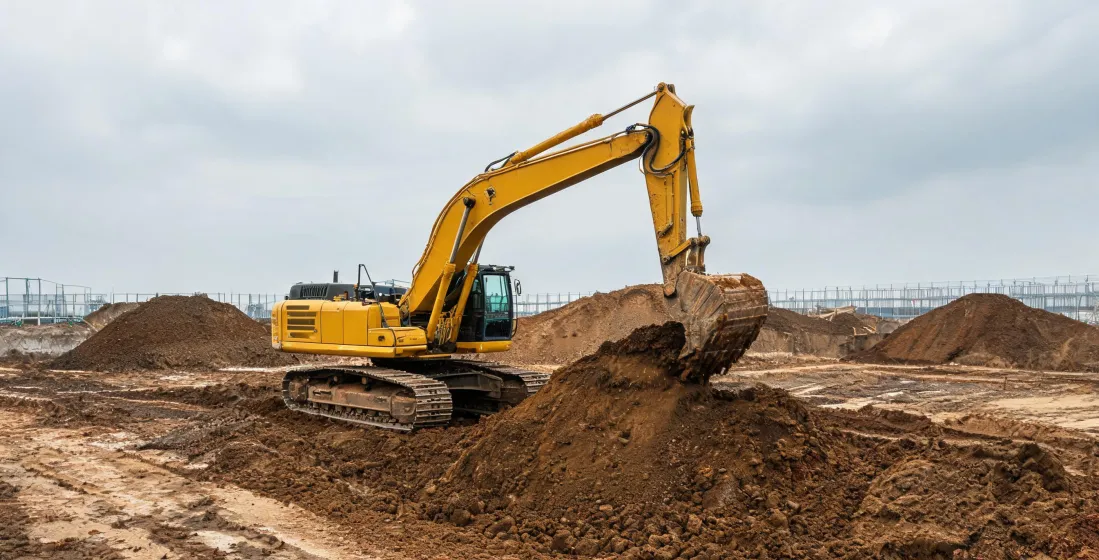
Quick introduction: I'm a procurement manager who has been handling construction equipment orders for eight years. I've personally made—and documented—eleven significant sourcing mistakes, totaling roughly $240,000 in wasted budget. Now I maintain our team's equipment sourcing checklist. This article is that checklist, with the stories behind it.
Here's the thing: there's no single "right way" to buy construction equipment. The approach that works for a fleet manager standardizing on SANY excavators isn't what works for a startup shopping used machines. So instead of giving you one generic answer, let me break this into the four scenarios I've lived through—and the mistakes I made in each.
The four scenarios:
- Scenario A: Buying new SANY excavator or telehandler units from a dealer
- Scenario B: Sourcing backhoe OEM / private-label production
- Scenario C: Buying from a used excavator supplier
- Scenario D: Selecting a backhoe loader supplier
If you recognize yourself in one of these, keep reading. If you're in more than one, you'll see why that combination needs extra care.
Scenario A: Buying a new SANY excavator or telehandler
Who this fits: Contractors with steady utilization, fleet owners standardizing on one brand, companies that need warranty protection and predictable parts supply.
What I wish I'd known before my first SANY order:
1. Confirm parts inventory before you sign. A dealer can have the best quote in the region, but if they don't stock undercarriage parts for your specific model, you're looking at factory-order lead times. Ask the parts counter staff directly—not the sales rep. In my experience, parts staff give you a more honest answer.
2. Read the telehandler spec sheet until you actually understand it. Lift capacity can be rated at full boom height or at a reduced height. The difference matters. In 2019, I ordered a SANY telehandler assuming the rated capacity applied at full height. It didn't. We had to re-plan an entire material-handling sequence on a commercial project. Not ideal, but workable—after a delay.
3. Get delivery dates in writing. Sounds basic. I learned this the hard way when a verbal "within 30 days" turned into seven weeks.
4. Ask about operator training. A SANY excavator has its own control patterns, joystick sensitivity, and cab layout. One day of operator training can prevent a lot of damage and downtime.
The mistake that taught me the most: In my first year (2017), I assumed the "standard" bucket configuration was the same across every excavator brand. It wasn't. The SANY excavator arrived, and within a week the bucket profile was wrong for our trenching spec. Three-week wait for a replacement attachment. $890 in redo, plus rental costs for a backup machine. That was my introduction to a principle I now preach: verify every attachment spec before you order, in writing.
The value of a guaranteed delivery date isn't the speed—it's the certainty. For equipment that must be on-site by a contract date, knowing the delivery date will be met is often worth more than a lower price with an "estimated" arrival window.
Scenario B: Sourcing backhoe OEM / private-label backhoe production
Who this fits: Equipment distributors who want to sell under their own brand, rental companies expanding a product line, established brands filling portfolio gaps.
What to look for in a backhoe OEM partner:
1. Factory capability. Visit the facility yourself. Look for their own welding lines, machining centers, and paint booths. Some "OEMs" are actually assembly workshops—they buy components and bolt them together. That's a different risk profile than a true manufacturer. I learned this distinction the expensive way.
2. Component spec transparency. Get every major component on paper: engine, hydraulic pumps, axles, hoses, fittings. If a partner hesitates to put specs into a written document, that's a red flag.
3. Private-label flexibility. Ask about paint colors, decals, badge placement, and serial number structure. If you want your backhoe loader to look like it belongs in your lineup, the OEM needs to accommodate that.
4. Warranty responsibility. Who honors the warranty? For how long? What's the turnaround on warranty parts? I've seen OEM partnerships fall apart on this single point.
5. Minimum order quantity. Some OEM partners start at 50 units. Others will work with 10. Match the MOQ to your actual sales forecast—not your hope.
The mistake: In September 2022, I signed with an OEM partner based almost entirely on price. The sample unit looked great in photos. When the first container arrived, the hydraulic hoses weren't routed per spec—and a follow-up factory visit revealed that the "welding line" was actually an assembly shed. $47,000 in rework. Ten units, six months late.
I still kick myself for not walking that factory floor before signing. If I'd seen the operation with my own eyes, I'd have caught it on day one.
Here's where most people get the causation wrong. They think expensive OEM partners charge more because they're "premium." Actually, OEM partners who deliver real manufacturing capability charge more because they have the overhead—welding, machining, quality control—and that infrastructure is exactly what prevents $47,000 rework disasters. The price reflects the operation, not the other way around.
Scenario C: Buying from a used excavator supplier
Who this fits: Startups, single-project contractors, fleet managers stretching a tight budget.
What to look for:
1. Don't trust the hour meter. Verify through maintenance records, then have a technician read the engine and hydraulic system data directly. Hour meters get replaced. They get rolled back.
2. Inspect for repaint. Fresh paint can hide cracked booms, leaking cylinders, and worn hoses. Look along seal seams, door edges, and around the undercarriage for overspray. I've seen a machine that looked showroom-clean in photos—and had fresh paint hiding a corroded dipper arm in person. The photos were angled just right.
3. Ask about undercarriage age. Undercarriage replacement on a mid-size excavator can run $8,000–15,000. Know what's left before you negotiate.
4. Get a third-party inspection. It's worth the $500–800. If the seller pushes back on an independent inspection, that's a deal-breaker.
5. Get warranty agreements in writing. I knew I should have gotten a written 30-day warranty agreement on a used excavator, but thought "what are the odds?" The odds caught up with me when the swing motor seal failed in week three. $4,200 repair. The verbal agreement was forgotten.
To be fair, not every used equipment seller is problematic. In fact, the honest ones I've worked with encourage third-party inspections—because they know their machines pass. Those are the suppliers to build long-term relationships with.
The most frustrating part of used equipment sourcing: the same issues recurring despite careful review. You'd think a $500 inspection would catch everything, but hidden issues still slip through. After the third surprise repair, I created a used equipment inspection checklist. It has caught 11 potential problems in the past 18 months.
Scenario D: What to look for in a backhoe loader supplier
Who this fits: Contractors who need one versatile machine across multiple job sites, rental companies, municipal fleets.
What to look for in a backhoe loader supplier:
1. Parts and service lead time. A backhoe loader is a utility machine. When it's down, your small jobs are down. Ask directly: how long for a hydraulic pump? An injector? A starter motor? A supplier with local parts stock is worth more than one with a slightly lower price and a 10-day parts lead time.
2. Dealer network. Check the coverage map. If you work in a region where the nearest authorized dealer is 300 miles away, factor that into the decision. Some brands—including SANY backhoe loader models—have strong dealer coverage in certain regions and gaps in others.
3. Financing options. Some suppliers offer equipment financing with flexible terms. Account for the full cost of the machine, not just the sticker price.
4. Resale value. Certain backhoe loader models hold value better than others. If you plan to upgrade in five years, this matters more than a small difference in initial price.
5. Operator comfort and visibility. An operator who can see the job clearly will be more productive and make fewer mistakes. Sit in the cab. Reach the controls. This sounds elementary, but dealers don't always encourage the 20-minute test that reveals ergonomic issues.
The frustration that changed my process: Our previous backhoe loader supplier promised a two-week delivery and delivered in five. Second time, I pushed back. Third time, I was ready to switch entirely. The pattern wasn't bad luck—it was a supplier who consistently over-promised to win orders. What finally helped was building a delivery performance tracker into our supplier evaluation process. We've flagged four underperforming suppliers using that tracker in the last two years.
How to decide which scenario you're in
If you're not sure where you fit, ask yourself three questions:
1. How many hours per year will the machine actually work? If you're running 1,500+ hours annually, buy new—the warranty, reliability, and predictable parts supply pay off. If you need a machine for one project, a used unit might make more sense.
2. Do you need your own brand, or just a working machine? If you're a distributor or rental company wanting a private-label product, backhoe OEM sourcing is your path. If you just need a machine working by Monday, buy from a dealer.
3. How much downtime can you tolerate? If three weeks of waiting for parts would sink you, prioritize suppliers with local inventory. If you can absorb downtime, more options open up.
Rough self-test:
- I need machines working 1,500+ hours a year, with warranty protection → Scenario A or D (new)
- I want to sell equipment under my own brand → Scenario B (backhoe OEM)
- Budget under $60,000 and downtime is tolerable → Scenario C (used)
- I need one machine for mixed small jobs, with local support → Scenario D (backhoe loader)
- I'm a dealer or distributor expanding my product line → Scenario B (OEM) or A (SANY full-line)
Total cost of ownership includes the base price, attachments, shipping, parts, downtime, and resale value. The lowest quoted price is rarely the lowest total cost. Don't hold me to this, but I'd add 10–15% onto any delivery estimate you receive—just as a mental buffer.
Bottom line: The most valuable thing I've built in this job isn't a supplier relationship or a contract. It's a checklist. 5 minutes of verification beats 5 days of correction. The checklist I created after my third major mistake has saved us an estimated $48,000 in potential rework in the last 18 months. We've caught 47 potential errors using it.
Granted, this requires more upfront work. But it saves time later. In my opinion, the single biggest shift for any procurement person—whether you're buying SANY excavators, exploring backhoe OEM partnerships, or evaluating a used excavator supplier—is this: treat the pre-purchase verification as part of the purchase price.
You can't avoid every problem. But you can stop repeating the same ones.

Charlotte Avery is an earth-moving machinery analyst covering excavators, mini excavators, loaders, skid steers, dozers, graders, compactors, and attachments. She uses ISO 6165 machine classification and ISO 20474-1 safety requirements while examining operating mass, rated payload, breakout force, ground pressure, stability, visibility, guarding, and attachment compatibility. Her work helps contractors and fleet buyers match machine size, undercarriage, transport limits, and protective features to terrain, duty cycle, and jobsite access.