Backhoe Wholesale Cost Guide: A $3,200 Bucket Mistake and the SANY Excavator Lesson It Taught Me
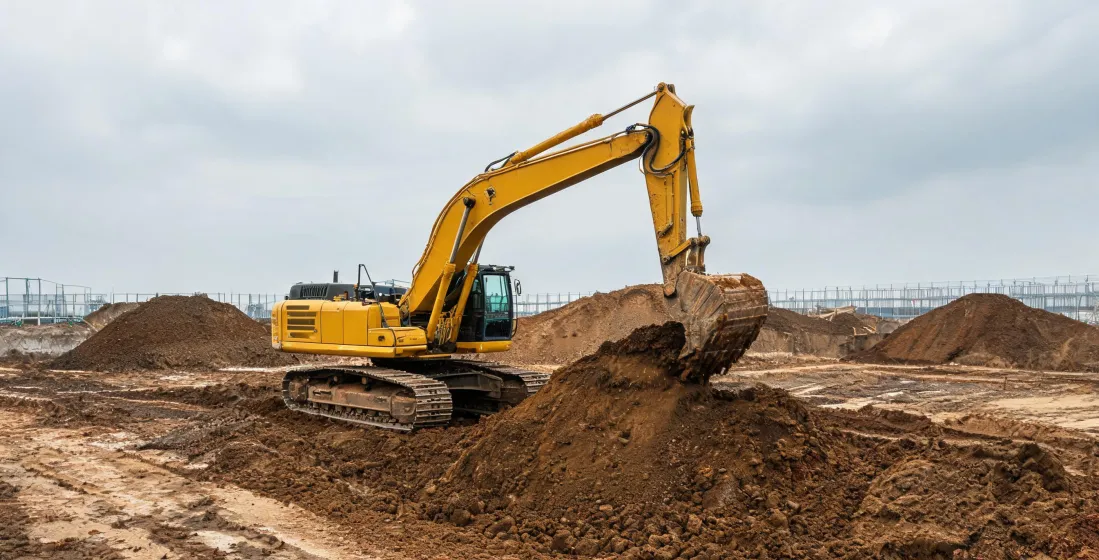
On a Tuesday in late February 2025, I approved a $3,200 backhoe bucket order and thought the hard part was over. It wasn't. Three weeks later, those buckets were sitting in our lot, unpinned and useless. The customer's old backhoe loader went back to wearing buckets that should have been retired long ago.
I've handled equipment procurement for a construction equipment dealership for nine years. I've personally made eleven significant mistakes worth roughly $21,000 in wasted budget. This one wasn't the biggest, but it was the most avoidable. That's why I now maintain our team's procurement checklist: to stop other people from repeating the same error.
The Order That Seemed Easy
The whole thing started because one of our sales reps had been working a SANY 135 excavator for sale lead for two months. The customer finally said yes to the machine, but he wanted the bucket package priced as part of the same deal. No problem, I thought. The excavator bucket was straightforward. The problem was the other part: three replacement buckets for his old backhoe loader.
The loader wasn't new. The customer had two buckets with cracked welds and one with worn pin bushings. He didn't want to spend thousands fixing an old machine, but he also knew new buckets would make the loader usable for another few years. Our sales rep saw that as an opportunity to close the excavator deal. I saw it as a bucket order.
I found a backhoe bucket manufacturer with good reviews, decent lead time, and a price that saved us $185 compared with the local attachment dealer. $185 on a $3,200 order. A 5% saving. At the time, it felt like a no-brainer.
Here's what I should have asked: which machine do you build these for? I didn't. I sent a PO that said 'standard pin spacing.' They confirmed 'standard pin spacing.' We were using the same words but meaning different things. I meant the customer's loader. They meant their most common pattern.
The 1.5-Inch Problem
The factory drawing arrived two days later. Pin diameter checked out. Width checked out. Cutting edge looked right. I even ran my finger over the weld diagram. The one measurement I didn't verify was the pin spread: the distance between the two pins on the loader bracket. I assumed 'standard' meant the same thing to both of us. It didn't.
Here's the twist: the manufacturer was a real manufacturer, not a middleman reseller. They weren't trying to cheat anyone. Their standard backhoe bucket line was built around a compact excavator coupler pattern. If the order had been for a SANY 135 excavator, that pattern probably would have been fine. But the customer's backhoe loader was older, with a wider pin spread. Wider by 1.5 inches. That's all. 1.5 inches.
On delivery day, the first bucket wouldn't latch. We tried the other two. Same problem. The old buckets went back on. The customer didn't yell. Worse, he went quiet. That quiet was a lot harder to handle than a complaint.
Why did I approve it? Because the drawing looked right. Who pays for that? The customer's trust, and our budget. The redo, freight, and lost rental time added up to $1,840.
A $185 saving turned into a $1,840 problem.
The replacement order came from the local attachment dealer, who had asked one question we hadn't: what's the exact machine model and coupler type? That question took less than a minute. It would have saved us the whole mess.
What a Backhoe Wholesale Cost Guide Should Include
The real issue wasn't the price. The real issue was that I didn't have a useful way to compare options. A backhoe wholesale cost guide doesn't just list bucket prices. It has to compare the variables that determine whether a bucket works on the machine you own.
- Pin spread and pin diameter for the actual machine, not the manufacturer's default pattern
- Bucket width, depth, and cutting edge geometry
- Material grade and wear package
- Welding and QC standard
- Freight cost and lead time
- Factory drawing approval process
- Return and redo policy
Avoid the trap of asking only for a 'backhoe bucket price.' If the manufacturer asks for your machine model and bucket width, that's a good sign. If they give a price with no questions, treat that as a red flag.
Every one of those variables has a cost. Pin spread is a deal-breaker. Material grade decides how long the bucket survives on a real jobsite. Freight can turn a 'cheap' bucket into an expensive one before it arrives. If you skip these, you're not comparing buckets. You're comparing price tags.
For pricing context, I spot-checked public listings again in March 2026. A 16-inch standard bucket from a backhoe bucket manufacturer ran roughly $180 to $350 in moderate quantities. A 24-inch heavy-duty bucket ran roughly $320 to $550. Used SANY 135 excavator for sale listings were mostly in the $42,000 to $57,000 range for 2019–2023 units, depending on hours and attachment configuration. Those are ballpark asking prices, not commitments, and they change with steel prices and freight. Verify current rates before you budget.
When I started comparing with this mindset, the picture changed. Two suppliers can both quote 'standard buckets' and still be talking about different products. The guide is only as useful as the questions you ask.
The same logic applies when you scale up. On a bulk wheel excavator order, the dollar amount climbs fast, and attachment compatibility stops being an afterthought. A pin mismatch on a $3,200 order cost us $1,840 and a week of trust. On a larger order, that same mistake would be a lot harder to explain to anyone.
When I compared the wrong buckets and the replacement buckets side by side, I finally understood why the details matter so much. They looked almost identical. Same width. Same type of cutting edge. Same color. If you weren't measuring, you'd never see the difference. But the difference made the first set useless.
The Cost of Skipping the Details
The bottom line is simple: choosing the cheapest quote without verifying the total cost is a bad habit. I'm not saying cheap buckets are always bad. I'm saying the lowest quoted price is not the same as the lowest cost once you include fit, freight, downtime, and redo.
If you're buying a SANY excavator and backhoe buckets from separate sources, you are the translation layer. Don't assume the bucket manufacturer knows the machine. Send them the actual machine model, the coupler type, and the pin spread. Ask them to confirm in writing that the bucket fits before you approve any drawing.
Now I run every attachment order through the same checklist. I write the machine model on the PO. I attach a photo of the coupler. I ask for a drawing review and get it signed. It takes twenty minutes. That's cheap insurance.
Trust me on this one. I've paid for this lesson. The next PO you sign could be the one that works the first time.

Charlotte Avery is an earth-moving machinery analyst covering excavators, mini excavators, loaders, skid steers, dozers, graders, compactors, and attachments. She uses ISO 6165 machine classification and ISO 20474-1 safety requirements while examining operating mass, rated payload, breakout force, ground pressure, stability, visibility, guarding, and attachment compatibility. Her work helps contractors and fleet buyers match machine size, undercarriage, transport limits, and protective features to terrain, duty cycle, and jobsite access.