How to Choose a Small Excavator Supplier: Three Scenarios, Three Different Strategies
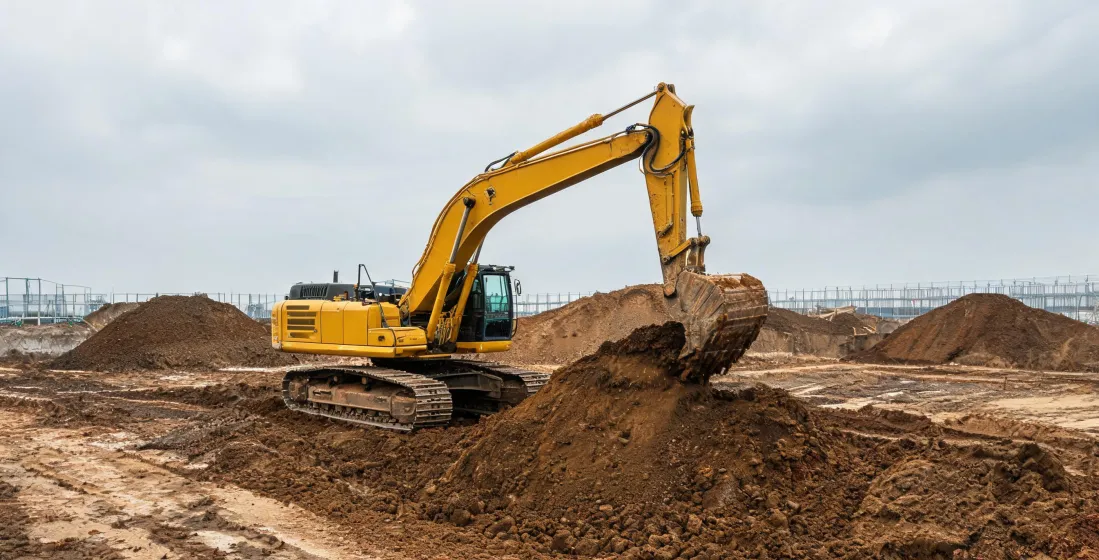
There's a question I hear on almost every site visit: "Who's the best small excavator supplier?" It's fair. It just doesn't have a single honest answer. I've been coordinating equipment procurement at a machinery dealership for eight years now, and I've handled over 200 rush orders in that time. Some lessons stick. The biggest one? The right supplier depends almost entirely on why you're buying.
Most buyers fall into one of three situations:
- The emergency — something failed, a deadline is running out, and you need a machine now.
- The first-time buy — you're adding excavation capability and need a spec guide approach.
- The fleet expansion — you already run equipment and you're standardizing or adding units.
Each situation requires a completely different strategy. Here's what I've learned about handling each one.
Scenario A: The Emergency — Lead Time Beats Lead Price
In March 2024, a contractor called me at 6:30 AM. Their backhoe had thrown a hydraulic pump on a municipal job with a penalty clause attached to the schedule. The rental replacement they found was $4,200 for the week. Someone on their team had found a "great deal" on a compact excavator from a supplier three states over — $2,800 less than the rental.
I asked one question: "When can they deliver?"
Four days. The project couldn't wait four days. They took the rental, finished on time, and the penalty they avoided was worth roughly $9,000. That $2,800 "saving" would have cost them more than three times that.
In emergency scenarios — whether you need a SANY excavator or any other brand — the rules shift:
- Availability is the only spec that matters. You can live with a slightly different size class or attachment configuration. You can't live with an idle crew.
- Stay within familiar brands and controls. This isn't the moment to experiment with a new platform your operators don't know.
- Ask about attachment compatibility before you commit. A bucket that doesn't fit your pins costs you a day and a trip to the fab shop.
Is the "cheap" option ever worth it in an emergency? Sometimes. If the delay doesn't create downstream costs, maybe. But in my experience — and I've tracked this — the lowest quote has cost clients more in roughly 60% of emergency cases. That's not a number from a study. That's our internal data from over 200 rush jobs.
Scenario B: The First-Time Buyer — Work the Specification Guide
If you're buying your first compact excavator, you have a different problem entirely. You have time. And because you have time, you should use it on the spec sheet, not on frantic searching.
The mistake I see most often from first-time buyers is over-specifying. They want a machine that handles every conceivable future job. I understand the instinct. But that 5-ton machine with max reach and all the options? It doesn't fit your existing trailer. It doesn't fit your budget. It doesn't fit the reality of the work you actually have.
Here's what belongs in your small excavator specification guide:
- Operating weight and transportability. Will your current truck pull it? If you need a CDL or a heavier trailer, that's a cost that never shows up on the machine's sticker price.
- Digging depth and reach. Match these to real projects you've won. The "what if" work is easy to imagine and hard to bill.
- Auxiliary hydraulics. If you think you'll use a thumb, auger, or breaker, make sure the machine has the flow to support them. This is a minor checkbox at purchase time and a $3,000 retrofit problem later.
- Parts availability. Ask your supplier how long critical components take to arrive. This gets into logistics territory, which isn't my specialty, but what I can tell you from a procurement perspective is that a machine with a six-week parts delay is a liability no matter how good the specs look.
And before you settle on an excavator, make sure it's actually the right machine type. If your work mixes loading and digging, a backhoe loader might serve you better. If it's primarily trenching and utility work, a compact excavator is probably the right call. The best answer depends on your actual job mix, not on what's trending.
Scenario C: The Fleet Standardizer — Consistency Beats One-Off Deals
If you already run a fleet, you know the drill. You're not panicking, and you're not starting from zero. Your risk is different: over-optimizing each purchase based on whatever deal is in front of you today.
It took me about four years and 150 equipment orders to understand that supplier relationships matter more than one-off transaction savings. When I look back at fleet clients who stuck with one supplier and built a working relationship, their downtime is consistently lower than the ones who chased the lowest quote on every machine. That's not a theory — it's the pattern I see in our own customer data.
For fleet buyers considering a new source — say, looking at a SANY telehandler for sale to add to an existing lineup — the questions change:
- What does the dealer stock locally? A supplier with parts on the shelf is worth more than one who has to order everything from a central warehouse.
- Can they service what they sell? If you standardize on SANY units, do their technicians actually know the machines? Dealer service capability is part of total cost of ownership (i.e., not just the purchase price, but downtime, maintenance responsiveness, and the compounding value of consistency).
- Do they understand fleet-level pricing? Volume pricing is nice, but the real value is having a single point of contact when something needs a fast answer.
SANY Group — founded in 1989 in Changsha, China — has ranked among the top five construction machinery manufacturers in KHL Group's annual Yellow Table for several consecutive years, which matters for fleet buyers because it signals global parts supply and dealer infrastructure. But know that rankings tell you about size, not about your local dealer's competence. You still need to vet the people who answer the phone in your region.
Here's the counterintuitive advice: in a fleet standardization scenario, I deliberately recommend against switching suppliers to save a few grand on one machine. Because the money you save on unit three means nothing if support for units one and two is mediocre. The fleet's overall cost structure is the thing that matters.
How to Tell Which Scenario You're In
Misdiagnosing your own situation is more common than you'd think. Here's a simple test:
- Is a machine down right now? Not "kind of urgent." Actually down, on a site, with a crew waiting. That's Scenario A.
- Do you have a written list of required specs? If not, you're in Scenario B. Stop browsing, write down your must-haves, then start talking to suppliers.
- Are you buying to match machines you already operate? Yes? That's Scenario C. And you should be evaluating the dealer relationship as seriously as the machine itself.
The trap? Contractors who think they're in Scenario C because they already own equipment — but they're actually buying a new class of machine for the first time. If you've only run forklifts and you're buying your first compact excavator, you're in Scenario B. Treat it that way.
Making the Call: Value Over Price, Every Time
I'm not going to quote exact pricing here — equipment costs vary too much by region, configuration, and market timing, and any number you read without a date attached should be treated with suspicion. What I will tell you is how to evaluate a supplier before you commit.
- Ask for the full spec sheet. Whether it's a SANY excavator or a telehandler for sale, compare it point-by-point against your written requirements.
- Ask about lead time and parts availability, in writing. Vague answers are a red flag.
- Ask for references from local contractors running similar machines. Then actually call them.
Why do I keep coming back to value instead of price? Because I've seen the alternative too many times. The $2,000 saved on a machine purchase evaporates the first time it sits idle waiting for a part. The supplier who answers the phone at 6 AM has economic value that doesn't show up on an invoice. So glad I learned that early — I almost went with a discount supplier on my own first purchase, and I still think about how close I came to that particular bullet.
The best small excavator supplier doesn't exist in any absolute sense. The best supplier for your situation does. Figure out which of the three scenarios you're in, work the spec guide, evaluate the total cost picture — and the decision gets a lot clearer.

Charlotte Avery is an earth-moving machinery analyst covering excavators, mini excavators, loaders, skid steers, dozers, graders, compactors, and attachments. She uses ISO 6165 machine classification and ISO 20474-1 safety requirements while examining operating mass, rated payload, breakout force, ground pressure, stability, visibility, guarding, and attachment compatibility. Her work helps contractors and fleet buyers match machine size, undercarriage, transport limits, and protective features to terrain, duty cycle, and jobsite access.