I Spent Six Weeks Vetting Used Excavator Suppliers. Here's the 11-Point Checklist That Saved Us From a $48K Mistake.
How it started: the day the excavator quit
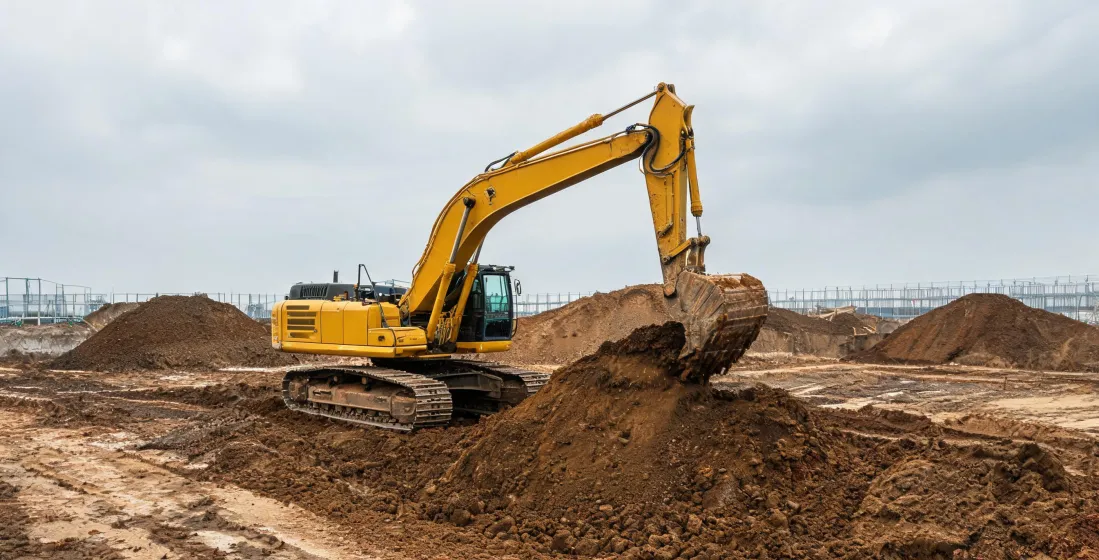
March 2023. One of our 20-ton excavators locked up its hydraulic system mid-shift — the operator called in saying the swing just died in the mud. Our local dealer quoted $22,400 for a rebuild and told us to expect three weeks of downtime.
I ran the math. The machine was still carrying about $31,000 on our books, but we'd already put $47,000 into repairs over three years. Anyone tracking this on a spreadsheet would have made the same call I did: stop feeding it.
The problem was what came next. A new 20-ton machine, bare spec, was quoting between $92,000 and $118,000. Our entire equipment budget that year was $1.2 million. That's a tenth of the budget on one unit.
So I went to the used market. And that's where the real story starts.
Six weeks, eight suppliers, three near-misses
Between mid-March and the end of April, I contacted eight used excavator suppliers. A mix: cross-border traders, auction middlemen, small dealers who claimed to have "first-hand stock only."
Supplier #1 — the $42,000 trap
A 2018 unit, 4,800 hours on the meter, quoting $42,000. Clean paint, undercarriage wear within reason. I nearly signed.
Then I made a rookie mistake in the other direction: I trusted the listing. "Original paint, no major repairs." Sounded fine. I didn't ask for hydraulic filter service records until week three.
When our third-party inspector finally pulled the pump serial number, it didn't match the machine's ID plate. Somebody had swapped the main pump. That single item is a $6,800 rebuild waiting to happen.
Supplier #2 — the fine-print warranty
Quoted $38,500, cheaper. But the "30-day machine warranty" collapsed the moment the machine entered a "production work environment." What counts as a production environment? They wouldn't say. Not ideal, but workable — until you realize that's every job site.
From supplier #3 onward, I changed the method
I built a three-column table: quoted price, hidden costs, verification difficulty.
Most buyers focus on the hour meter and completely miss the hydraulic and undercarriage service history. The hour meter can be rolled back. The pump serial number can't.
After factoring transport, third-party inspection, oil sampling, wear-part replacement, and expected downtime on the first machine, the real landed cost wasn't $42,000. It was closer to $60,650:
- $42,000 purchase
- $1,400 transport
- $650 third-party inspection
- $6,800 main pump contingency
- $9,800 in projected downtime
Meanwhile, a factory-configured SANY 225 excavator with hydraulic quick coupler and standard bucket was quoting at roughly $57,200 equivalent. Same class, same bucket capacity. Full factory warranty.
The turn: why I hadn't looked at OEM channels first
Here's the honest part. I parked the entire search inside the used market because I assumed one thing — new is always more expensive.
That's a textbook case of getting the causation backwards. People think low-quote vendors win on price. In reality, the vendors who keep their quote low are the ones who make it up later on the things you don't see: shipping, warranty exclusions, parts markups, and service calls that never show up on the original PO.
A colleague on our procurement team asked me a question I should have asked myself in week one: have you looked at the OEM channel?
Turns out several manufacturers now run small excavator OEM and backhoe loader OEM programs — direct-to-fleet pricing, customizable attachments, and private-label options for companies running mixed-brand paint schemes across regions. I hadn't looked because I'd assumed OEM meant retail sticker price.
That's when I started reviewing the SANY excavator lineup seriously. Three things stood out:
- Full-line coverage — the same channel quotes excavators from 1.7-ton mini up through 40-ton class, plus loaders, telehandlers, forklifts, and graders. Expanding the fleet later doesn't mean re-vetting five vendors.
- OEM / private-label flexibility — for fleets running regional paint and branding variants, this quietly saves five figures across a machine's life.
- Service footprint — I specifically asked about response times in our two operating regions. Used dealers can't match that, and the ones who claim to are usually reselling a third party's network.
I'm not going to pretend there were zero trade-offs. The SANY 225 delivery window was 6–8 weeks, slower than picking up a used unit off the lot. And I put spare-parts availability in the contract as an explicit addendum before signing, because I've been burned before by service coverage that looked fine on paper.
The result: an 18-month lookback
We ordered two SANY 225 excavators, each configured with a hydraulic quick coupler and a 1.2 m³ standard bucket. All-in landed cost including transport, first service, and attachments: $121,400 for the pair.
Eighteen months later I pulled every invoice and every maintenance log to compare against what the used path would have cost us.
What the numbers actually showed
- Purchase + delivery (used path est.): ~$50,850 per unit
- Purchase + delivery (SANY 225, actual): ~$60,700 per unit
- First-year unplanned downtime (used est.): ~220 hours
- First-year unplanned downtime (SANY, actual): ~34 hours
- Downtime impact on revenue (used est.): ~$19,600
- Downtime impact (SANY, actual): ~$3,100
- 36-month TCO estimate — used path: ~$70,400 per unit
- 36-month TCO — SANY 225: ~$63,800 per unit
The gap wasn't the headline. The headline was predictability. Every number on the used side was an estimate. Every number on the SANY side could be tied to a document.
What I look for in any used excavator supplier now
After that quarter, I built an 11-point checklist. It applies to used excavator suppliers, and it works just as well against OEM and private-label channels when you're benchmarking quotes.
- Machine serial number matches major component serials. Undercarriage, pump, and engine — all three, all checks.
- Continuous service records. Gaps in a maintenance log mean gaps in the asset history. No exceptions.
- Third-party inspection chosen by the buyer, not recommended by the seller.
- Oil sample reports under 90 days old. Anything older is fiction.
- Warranty triggers spelled out in writing. If the warranty expires the moment the machine works, it isn't a warranty.
- Quoted price includes transport, rigging, and local clearance. On cross-border deals those three add 8–14% to the budget.
- Attachments are OEM-matched. Off-brand couplers wear the hydraulic quick-hitch interface faster — the cost shows up 12 months later.
- Service coverage overlaps your actual job sites, not just your billing address.
- Parts commonality across your existing fleet. Can machines swap consumables in the field? If not, your parts inventory doubles.
- Written returns and exchange terms. Verbal assurances aren't a backstop.
- A "no first quote" rule. I never accept an initial number. I rerun it as a three-year TCO before it goes in the spreadsheet.
Five minutes of verification beats five days of correction. For us, that stopped being a slogan the week I got a $6,800 invoice for a pump I should have caught before signing.
If you're evaluating used excavator suppliers — or comparing OEM quotes for small excavator OEM or backhoe loader OEM programs — I'll say it plainly: don't just price the machine. Price the three years after it lands. The answer usually sorts itself out.

Diego Ferreira is a crane and lifting-equipment analyst covering mobile, crawler, tower, and truck-mounted cranes, hoists, and lifting mechanisms. He applies ISO 4301-1 classification through working cycles, load spectrum, and average displacement, then uses ISO 9927-1 inspection principles to examine structures, ropes, brakes, limiters, and safety devices. His guides help lift planners and equipment buyers evaluate usable capacity after radius, configuration, reeving, wind, ground bearing, outrigger setup, and inspection status are considered.