SANY Bulk Equipment FAQ: Excavator, Motor Grader, and Backhoe Spec Lessons from a Distributor
-
What's the most common mistake on a first bulk China excavator order?
-
Do identical SANY excavator models have identical specs?
-
What goes into a backhoe specification guide for distributor buying?
-
What's the typical SANY motor grader configuration mistake?
-
Do you inspect every unit, or is a factory certificate enough?
-
What hidden costs show up after you sign?
-
Should a new distributor order SANY machines under a private label right away?
-
If you could do 2017 over, what would you do differently?
If you're researching "SANY excavator" or "bulk China excavator" orders, you've probably seen the same glossy brochure pages I saw in 2017. But the lessons that protect your budget are not in the brochure. I've been a sourcing manager for a construction equipment distributor since January 2017, handling wholesale and OEM orders from Chinese manufacturers. I've personally made and documented 11 significant mistakes in that time, totaling roughly $143,000 in wasted budget. The questions below are the ones I now send to every new dealer before we order anything.
What's the most common mistake on a first bulk China excavator order?
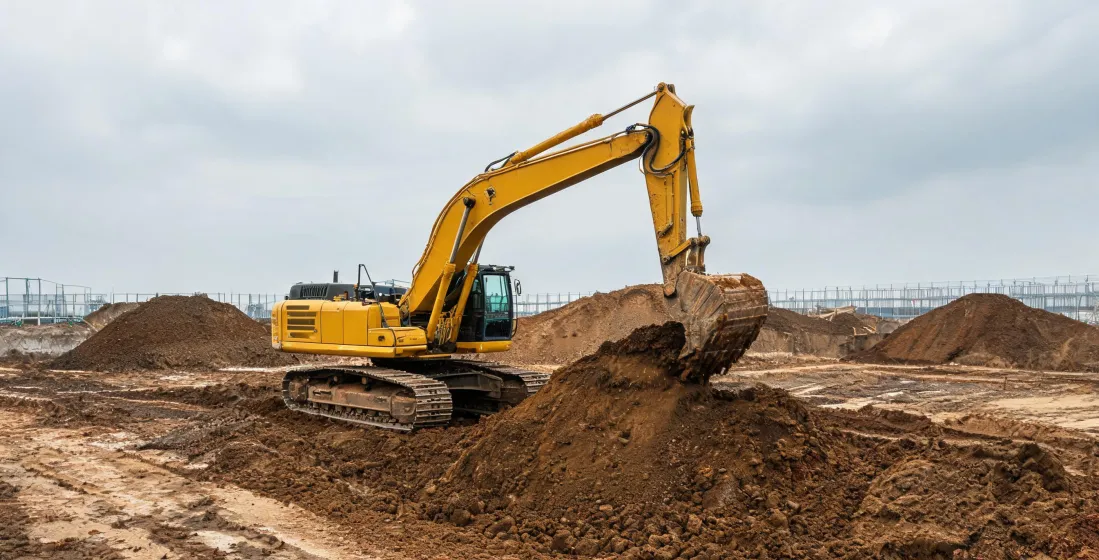
Treating it like a commodity purchase. In my first year, I ordered ten SANY 21-ton-class excavators for our rental fleet. I compared bucket sizes, dig depths, and operating weights, then approved a quote that simply said "standard configuration." It turns out "standard" does not include every option every customer expects.
We did not order the breaker-ready auxiliary lines. It's tempting to think that all excavators from a full-line manufacturer can handle a hydraulic breaker, and maybe the base machines can be plumbed later. But "later" meant doing it in our workshop with parts on backorder.
What I mean is: the machines were good. The process was wrong. We spent roughly $22,000 on retrofits, extra handling, and lost rental weeks. That is the moment our team created the first version of the specification checklist that now travels with every order.
Do identical SANY excavator models have identical specs?
Not necessarily—and that's not a quality problem. A model family can be built with different guard packages, track shoe widths, counterweights, hydraulic arrangements, and emissions packages depending on the destination market.
That last point was our hidden-cost lesson. We ordered machines for two neighboring countries and overlooked the fact that one market required a different emissions certificate. If I remember correctly, the paperwork delay cost us about five weeks at the port. The machine was fine; the compliance tag was not what the local authority expected.
So don't quote by model name alone. Ask for the configuration code, option list, and certificate numbers. The regional SANY distributor can confirm what applies to your market, but the binding document is the written order confirmation.
What goes into a backhoe specification guide for distributor buying?
A backhoe spec sheet usually starts with engine power, dig depth, and loader breakout force. Those are important, but a distributor's guide needs to be built for verification, not marketing.
- Engine model, power rating, and emissions compliance certificate reference
- Transmission type, drive configuration, and axle specifications
- Loader breakout force, lift height, and bucket rollback
- Backhoe digging depth with standard and extendable dipper arms
- Auxiliary hydraulic flow, pressure, and coupler type
- Operating weight, tire size, and transport dimensions
The column most templates miss is documentation. Every number on the guide should have a matching line on the factory order. I once reviewed a specification guide with 40 data points, but the one item that mattered—hydraulic quick coupler type—was not on it. For a distributor that rents attachments, that one line can decide whether a machine earns revenue or sits.
What's the typical SANY motor grader configuration mistake?
Ordering "a grader." By that I mean treating the motor grader as one generic box with an engine and a blade. The machine's actual value depends on blade length, moldboard control, all-wheel-drive availability, scarifier or ripper fitment, and whether the cab specification matches what your operators expect.
I learned that when we ordered six SANY motor graders for a road maintenance contract. I assumed the rear ripper was included because the brochure photo showed one. The photo was for a different option package. The graders worked well, but the customer couldn't rip the old asphalt layer without a second machine. Three weeks of schedule pressure later, we had the attachments retrofitted at our cost.
The mistake was not the factory's. It was mine for not verifying the option list. For any motor grader order, put the blade size, moldboard controls, drive type, ripper/scarifier requirement, and cab specification in writing, even when the sales rep says the package is "standard."
Do you inspect every unit, or is a factory certificate enough?
A factory certificate tells you what the manufacturer intended to build. A pre-loading inspection tells you what is actually on the machine. The difference matters, especially during a model change or when a batch is produced across two production dates.
For our first backhoe orders, we hired a third-party inspector to check a sample from each lot. Then we started checking every serial number against the purchase order. That sounds expensive, but it is far cheaper than container demurrage, customs rejection, or a customer receiving the wrong attachment coupler. Since we formalized the process, we've caught 47 potential errors using the checklist in the past 18 months. Most were minor, but two would have stopped machines from working on arrival.
Take it from someone who paid for the lesson: request serial-number-level checks, not just a visual sample.
What hidden costs show up after you sign?
Ocean freight, duties, and inland transport are not hidden. You can quote them before signing. The hidden costs come from assumptions that were not written down.
During the Chinese New Year period a couple of years ago, our SANY contact offered to move an order to an earlier vessel if we approved a revised technical sheet within two hours. In hindsight, I should have said no and kept the original timeline. Instead, I approved quickly because the customer was waiting. The revised sheet applied to a different configuration batch, and the certificate didn't match what our customs broker needed. The machine sat at the destination port for weeks.
That experience created our current rule: no same-day approvals on specification changes. Every change gets at least one business day of review. It feels slower, but it's actually faster because we stopped creating rework.
Should a new distributor order SANY machines under a private label right away?
Not on the first order. The first order should already be a big commitment, so don't stack extra variables on top of it.
SANY is a full-line manufacturer with OEM and private-label capabilities, and that can be an attractive long-term strategy for a distributor. But private-label programs touch more than paint: manuals, decals, warranty registration, packaging, and model naming all need to match your brand system. If your branding and support structure are not ready, standard SANY branding will not hurt your sales. Once the core ordering process runs smoothly, add customization gradually.
I would still ask about private-label options during the first negotiation. That way you know what is possible later without making the first shipment more complex than it needs to be.
If you could do 2017 over, what would you do differently?
I would put the process before the price. Not a fancy system—just a simple digital approval log with columns for model, configuration code, serial number, target market compliance, attachments, and shipping date. Every approval would require a named person for each column.
In 2017 I thought my job was to negotiate the cheapest unit price. The real job was to verify what was being priced. Once we documented every specification decision and checked it before loading, our avoidable mistakes dropped dramatically. The SANY machines were not the problem. The gap between what we thought we ordered and what we actually ordered was the problem.
Charlotte Avery is an earth-moving machinery analyst covering excavators, mini excavators, loaders, skid steers, dozers, graders, compactors, and attachments. She uses ISO 6165 machine classification and ISO 20474-1 safety requirements while examining operating mass, rated payload, breakout force, ground pressure, stability, visibility, guarding, and attachment compatibility. Her work helps contractors and fleet buyers match machine size, undercarriage, transport limits, and protective features to terrain, duty cycle, and jobsite access.