SANY Excavator vs. Private-Label Compact Equipment: A Procurement Comparison
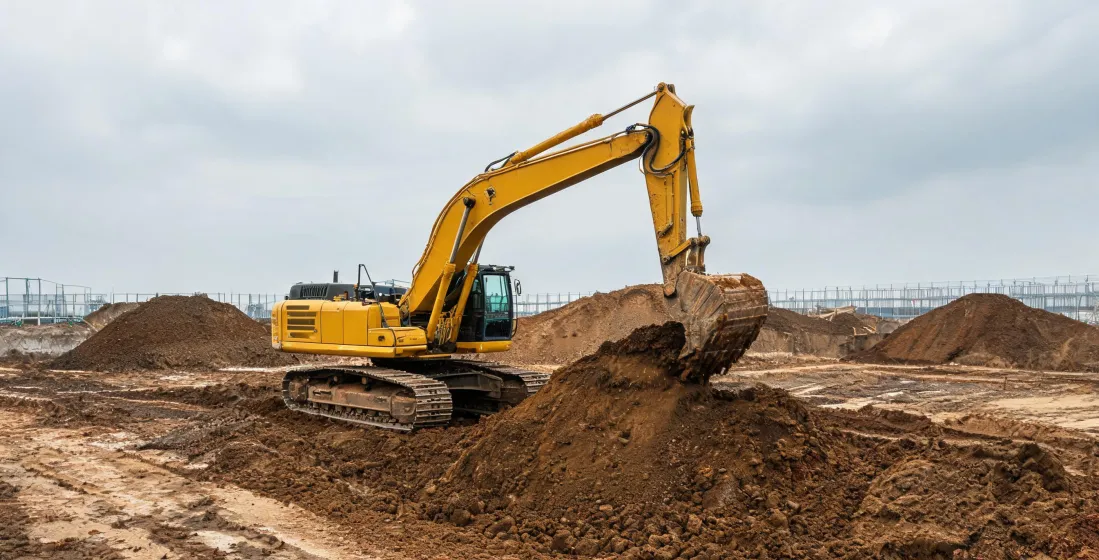
If you buy compact excavators and backhoes for a living, you've probably felt the pull in both directions. On one side, a branded SANY excavator with a known spec and dealer support. On the other, a compact excavator private-label deal that puts your name on the machine and your margin on the base price. Both can work. But after eight years as a procurement coordinator and more than 60 rush orders, I keep coming back to the same conclusion: the machine is the easy part. The hard part is basically time, compliance, and whoever owns the risk when something goes wrong.
This comparison is for distributors, rental-fleet managers, and independent contractors deciding between a branded SANY and a private-label/OEM route. I'm going to compare them the way I'd review a purchase order: delivery time, compliance, cost, and what happens after the sale.
Dimension 1: Delivery time — the emergency buyer's first filter
When I triage a rush order, time is the first question. Not price, not paint. Time. A branded SANY excavator sitting in a dealer's yard can be inspected, funded, and transported in days. A private-label order usually has to wait its turn in a factory slot. Last quarter alone, we processed 47 rush orders with 95% on-time delivery, and the ones that slipped were almost always custom or private-label orders.
One example: in March 2024, a client called at 9:30 Tuesday morning needing three 3.5-ton mini excavators for a municipal project that started the following Monday. Normal lead time for the private-label 3.5-ton units they'd been quoted was six weeks. We found a SANY dealer with two SY35s in stock and a third on allocation, paid an $850 expedite fee, and put all three on site by Thursday. Missing that deadline would have triggered a $50,000 penalty clause. That's what the branded route can buy: optionality.
Does that mean private-label is always slower? No. If you're ordering 50 units on a rolling schedule, the factory slot works fine. The problem is when you treat a quoted lead time as a guarantee. It's an estimate, and estimates don't care about your client's penalty clause.
The most frustrating part of this business is watching the same late-delivery surprise happen three times with the same vendor. You'd think a signed contract would fix it, but it doesn't. Nobody plans to fail; they just plan on a schedule that was too optimistic.
Mini excavator compliance requirements: where deals die
Here's the dimension that never shows up in the sales brochure. Branded SANY excavators imported through proper distribution channels arrive with emissions certificates, labels, and serial numbers that line up. A compact excavator private-label import makes you the compliance expert. If you're not ready for that, stop reading and buy branded. And yes, I'm being blunt because I've lost money learning this.
I told an overseas factory rep, "make sure the engine is Tier 4 Final." He heard "put an EPA sticker on the engine." We discovered the misunderstanding when the first 20 units arrived with certificates for a different engine family. Result: we couldn't place those machines in California until the factory re-submitted paperwork. That took six weeks.
According to EPA 40 CFR Part 1039, new nonroad diesel engines have to meet Tier 4 Final limits. For the 8-19 kW engine class common in 3.5-ton mini excavators, that means NOx+NMHC at 7.5 g/kWh and PM at 0.30 g/kWh. For 19-37 kW machines, it drops to NOx+NMHC 4.7 g/kWh and PM 0.03 g/kWh. And if any unit will be used in California, you also need the CARB label and supporting documentation. This isn't an admin detail. It's the difference between sellable inventory and expensive yard art.
So before you sign an OEM or private-label agreement, run my compliance checklist:
- Engine serial number on the EPA certificate of conformity matches the engine plate.
- CARB documentation, not just an EPA label, if the machine could end up in California.
- Import paperwork that names you as the importer of record or clearly assigns that responsibility.
- English-language operator and service manuals, plus hydraulic schematics.
- A written answer to the question: Who fixes this machine when the dealer network won't touch it?
Five minutes with that checklist is the cheapest insurance in the equipment business. Most of the problems I've seen came from skipping it, not from a bad machine.
SANY 35 excavator price: the real comparison starts after the sticker
Let's talk numbers. In the dealer quotes I reviewed in early 2026, a SANY 35 excavator — the 3.5-ton SY35 — was landing between $42,000 and $49,000 with a standard arm, cab, and one bucket. That's base, before delivery and attachments. Prices vary by region and configuration, so treat that as a reference, not a quote.
Private-label equivalents came in roughly 8-15% lower on the invoice in the same period. That gap is real. But the invoice doesn't include your engineering review, your warranty backstop, your parts inventory, or your staff's time answering technical questions. When I see a cheaper sticker on a compact excavator, I add 20-30% to the cost in my head to account for the stuff the seller isn't putting on the quote (plus the quiet cost of your own support infrastructure). Sometimes the private-label route still wins. Sometimes it doesn't.
The same logic applies to a backhoe OEM program. If you want a backhoe with your paint color, your control layout, and your brand on the boom, an OEM agreement is the only way to get it. That flexibility is valuable. But with that flexibility comes the responsibility to define the spec. "Standard backhoe" doesn't mean the same thing in every factory. We both said "standard" once, and the first machine arrived with a different hydraulic quick-coupler setup than the rest of our fleet. That mismatch cost us a week and a $2,300 adapter kit.
OEM flexibility vs. branded consistency: the hybrid option
Here's the part that surprises people: you don't have to choose at the company level. A manufacturer like SANY can supply a branded SANY excavator line and also support a private-label or OEM program. The pragmatic distributors I know use both. Keep a branded inventory for fast-turn and retail sales. Build a private-label line for customers who want their own identity and order in enough volume to absorb the extra work.
The question isn't which is better. It's which route should this particular order take. If a customer needs financing, resale data, and a service network, branded SANY is the lower-risk choice. If the customer is a rental company that wants color-matched units and has its own mechanics, private-label can make sense.
Which should you pick when the deadline is real?
Let's make this usable.
- Choose a branded SANY excavator when: you need inventory this month, your buyer expects a recognized warranty, or you don't have an in-house compliance person. The price includes a lot of quiet insurance.
- Choose a compact excavator private-label or backhoe OEM program when: you're building a brand, ordering steady volume, and your team can own specifications, parts, and warranty support. If you have that infrastructure, private-label can be a real margin advantage.
- Choose neither when you're being rushed. A 48-hour deadline doesn't change the EPA label. If anyone tells you otherwise, they're trying to transfer their risk to you.
Every dimension in this comparison comes down to the same rule: prevent the problem before it becomes an emergency. In my role, I've lived through what happens when a distributor saves 10% on the invoice and spends three months fixing paperwork. I've also seen private-label programs work beautifully for teams that planned ahead. The difference is preparation, not luck.
Bottom line? I'll keep buying both, depending on the order. But I'll never let a rush order skip the checklist. Five minutes of verification beats five days of correction. When the correction is a $50,000 penalty or a container full of non-compliant machines, the math is even clearer.

Charlotte Avery is an earth-moving machinery analyst covering excavators, mini excavators, loaders, skid steers, dozers, graders, compactors, and attachments. She uses ISO 6165 machine classification and ISO 20474-1 safety requirements while examining operating mass, rated payload, breakout force, ground pressure, stability, visibility, guarding, and attachment compatibility. Her work helps contractors and fleet buyers match machine size, undercarriage, transport limits, and protective features to terrain, duty cycle, and jobsite access.