SANY Track Loader vs. Wheel Excavator vs. Private-Label Backhoe Attachment: A Distributor's Buying Guide
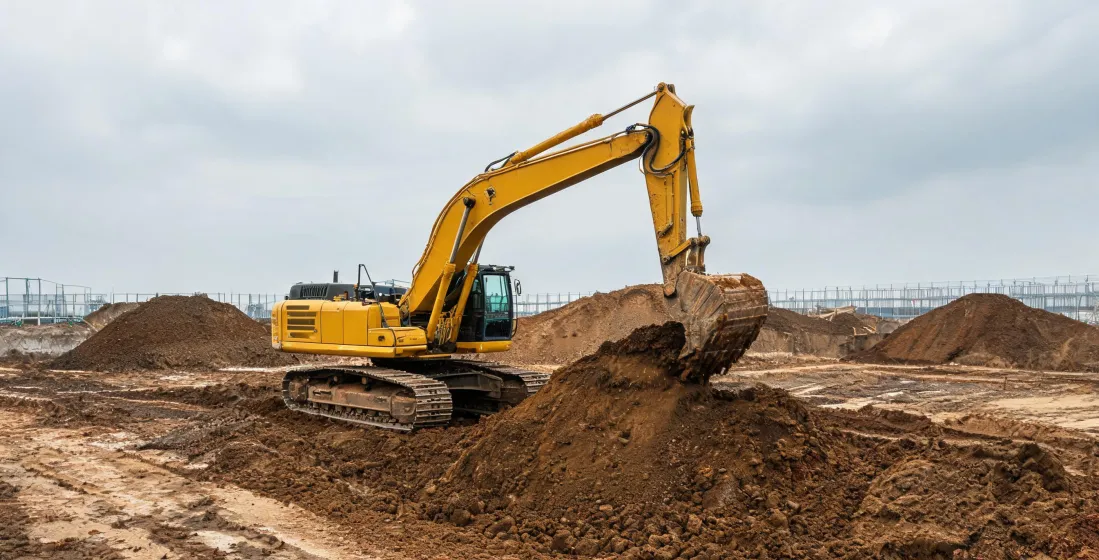
A few years ago I sat on the receiving side of a private-label backhoe attachment order that looked perfect on paper. We had approved serial numbers, drawings and an inspection certificate. The problem was not the steel. It was the hydraulic hose routing. The product fitted the carrier, but only when the operator did not fully cycle the boom. That mistake cost us a redo and a customer. I still kick myself for signing off without asking the factory for a physical test video.
I work as a quality and brand compliance manager for an equipment distributor with SANY machines in our range and a small attachment line under our own brand. I review roughly 220 catalog items a year, maybe 200 if I count only full machine launches, before they go to dealers and contractors. The point of telling you this is not to sound authoritative. It is to explain that this backhoe distributor buying guide comes from the person who checks the promises, not the person who sells the dream.
Set the comparison frame before choosing
If someone searches for SANY excavator, SANY track loader, or simply backhoe attachment for sale, they are often not comparing the same category of equipment. One of the first things I do with our internal sales team is separate three buying routes:
- SANY track loader – a track-based machine with a loader-style front end and, in backhoe duty, a digging attachment or rear subframe package. It suits soft ground and sites with poor wheel access.
- SANY wheel excavator – the integrated wheeled digging machine. A wheel excavator manufacturer like SANY builds the boom, counterweight, travel gear and hydraulics as one engineering package.
- Backhoe attachment private label – a standalone reverse backhoe attachment mounted on a customer's existing tractor or wheel loader, then sold under the distributor's own brand.
The conversation goes wrong when a dealer treats those three routes as if they are just variations of the same machine. They are not. One is a mobile excavator, one is a tracked loading machine with an attachment option, and one is an add-on product that depends completely on the host carrier.
Specialists know their limits. The best answer I can give you is not the machine I like most, but the machine that matches the site, the support model, and the label you are willing to stand behind.
Dimension 1: Moving between sites changes the answer more than digging depth does
People often choose a backhoe style based on maximum digging depth. In my experience, transportability kills more sales than depth. A customer who moves every two to three days has a different need to one who works in the same field for weeks.
A SANY wheel excavator can drive itself between jobs on paved roads, which is a huge advantage for municipalities and utility contractors. A track loader, by contrast, is slow and can damage surfaces during travel. It usually belongs on a trailer or lowbed. If your customer does most work at one site, the crawler platform is fine. If your customer is constantly chasing repair jobs along roads, the wheeled version is the one that keeps working.
For a private-label backhoe attachment, transportability is not really the issue, because the customer already owns the carrier. What matters is whether the carrier is suitable. I am not a geotechnical engineer or a tyre specialist, so I will not pretend to calculate flotation values here. What I can tell you from a quality and warranty view is this: tyre-based carriers may sink on soft ground, but they are easier to move between sites. Tracked machines solve soft-ground work while adding a transport cost. You have to decide which trade-off your customer can live with.
Dimension 2: The surprise is the sub-frame, not hydraulic power
Most distributors assume that a backhoe attachment works whenever the hydraulic flow and pressure match the attachment specifications. That is the wrong way to evaluate it. The first point of failure is structural.
A reverse backhoe attachment creates heavy leverage forces at the back of the carrier. A tractor or loader without a proper sub-frame, mounting brackets and counterweight plan will flex. I have seen attachments rated for a certain digging force perform badly because the carrier itself was too light. The attachment was not defective. The application was wrong.
On an integrated machine, the manufacturer controls that engineering risk. A SANY excavator, whether track or wheel, has a designed mounting structure and a counterweight plan. A track loader with factory backhoe capability is also a complete system. A private-label attachment is different: the attachment maker does not control the carrier, so the distributor becomes the system integrator.
Here is the conclusion that surprises many buyers: a heavier, more expensive attachment is often not the safest purchase. The safer purchase is the lighter attachment that stays within the structural limits of the carrier, or the integrated machine that was engineered for the digging loads in the first place.
Dimension 3: Private label makes you the manufacturer
If you plan a backhoe attachment private label program, you are not just buying boxes with your logo on them. You are taking responsibility for the full specification. Your brand will appear on the product while the customer operates it with a particular tractor model, bucket size and hydraulic setting.
For me, the quality gate starts with three documents:
- the host carrier list, with confirmed mounting kits and carrier weight ranges;
- the hydraulic spec at the quick coupler, including flow, pressure and return-line capacity;
- the load testing record for digging force, lift capacity and stability.
If the factory will only give you a generic brochure, that is a warning sign. I have rejected first articles because the drawing showed a universal mounting plate that did not match any of our actual carriers. The factory said it was within industry standard. We were not buying industry standard. We were buying a product that had to fit specific customer machines.
If you sell into the United States, FTC guidance on advertising substantiation applies here too. A claim such as fits most tractors or backhoe depth comparable to an excavator needs evidence. The evidence should come from tests, not from the marketing department. Your private label is a public promise that the product is safe and fit for the stated purpose.
What I would stock, and what I would not
I do not think there is one right answer for every distributor. There is only the right answer for the customers you already serve.
If your customers are groundworks and agricultural contractors working in places where wheeled machines get stuck, a SANY track loader route can be very sensible. It gives you a tracked platform, a loader bucket and backhoe capability without expecting the customer to move to a full excavator operation. Supporting this line requires parts for the undercarriage and hydraulic system, not just the attachment.
If your customers are utility teams, road maintenance crews and rental fleets that move often, the wheel excavator side of the SANY excavator line is probably more useful. It offers road travel, integrated quality and simpler operator training for regular road moves. From my quality viewpoint, an integrated machine is also easier to support: one manufacturer, one serial number, one parts list.
If your customers already own tractors or wheel loaders and only need occasional digging, a private-label backhoe attachment can be a clean way to enter the market. Keep the scope narrow. Do not claim it works on every carrier. Build a mount kit list, test the first production units, and be honest about the jobs it will not do.
And if you are not ready to support the full system, say so. A distributor who tells a customer this isn't the right product for us is rare. That honesty builds trust for every other product you sell. I would rather lose one attachment order than take on a private-label product that I do not yet know how to inspect, test and warranty.

Charlotte Avery is an earth-moving machinery analyst covering excavators, mini excavators, loaders, skid steers, dozers, graders, compactors, and attachments. She uses ISO 6165 machine classification and ISO 20474-1 safety requirements while examining operating mass, rated payload, breakout force, ground pressure, stability, visibility, guarding, and attachment compatibility. Her work helps contractors and fleet buyers match machine size, undercarriage, transport limits, and protective features to terrain, duty cycle, and jobsite access.