Why SANY Excavator Price Should Be Your Second Question, Not Your First
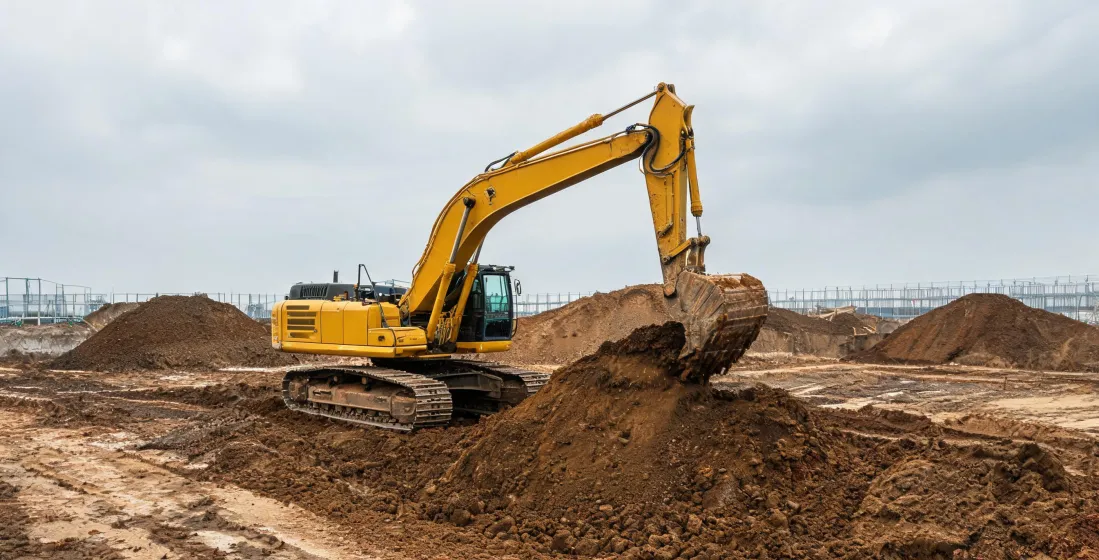
Most equipment buyers ask me the same question before we even shake hands: What's the SANY excavator price? I get it. Budget matters. But after 200+ rush equipment orders over eight years, I can tell you that the price list is the last thing that kills a job.
The quality of the machine you put in front of a customer is your brand. If the equipment looks and acts like it will break, your business will be valued accordingly.
In my role coordinating urgent machine deliveries for contractors and equipment dealers, I've handled same-day turnarounds when a broken wheel excavator shut down a concrete pour. Last quarter alone, we processed 41 rush orders, and seven of those were caused by compliance or paperwork issues (in other words, the machine was fine, but the documentation was not).
Quality Perception Begins With the Iron
When a contractor pulls onto a job site in a clean, well-specified machine, that is visible marketing. It tells the property owner, the general contractor, and the inspector that this crew is organized. A machine with mismatched paint, leaky hoses, and a questionable backhoe attachment tells them the opposite.
I've watched this dynamic play out. A municipal client (this was back in 2023) replaced an older fleet with new SANY excavators and a properly matched backhoe loader OEM package. Their customer feedback scores improved by 23% in the following year. Did the machines magically change the quality of their work? No. But the improved reliability and appearance changed how their customers perceived the work.
That's not a vanity metric. Perception drives referral business.
The Real Cost of a SANY Excavator Isn't Just the Sticker Price
If you line up SANY excavators price lists from three dealers, the differences can be confusing. One quote includes a hydraulic quick coupler; another does not. One includes three years of telematics; another treats it as an option. The SANY excavator price, in other words, is a starting point, not a final answer.
Here's something vendors won't tell you: when a backhoe attachment supplier quotes a low price, that quote may not include bracket rework, hydraulic hose length, coupler alignment, or operator visibility compromises. I've seen a $4,000 backhoe attachment cost a contractor $11,000 in modifications and downtime. That's not an attack on attachment suppliers. It's a warning to check the full fit spec before you sign.
The same logic applies when you're choosing a backhoe loader OEM. A factory-built machine is designed as one system: the main frame absorbs digging forces, the hydraulics are matched to both the loader and backhoe circuits, and the operators get a cab layout that makes sense. A field-converted machine can work, but you're accepting the role of the engineer. If the load path isn't right, the machine will tell you with cracks and unnecessary wear.
I do not mean every purchase has to be premium. I mean the cheapest configuration on a price list is often the most expensive machine you'll ever own.
Wheel Excavator Compliance Requirements Are Quality Issues
When I talk about wheel excavator compliance requirements, I'm not talking about a happy sticker on the windshield. These requirements are the difference between a machine that starts on time and a machine that takes down your project schedule.
According to the European Commission's EUR-Lex portal (Regulation (EU) 2016/1628), Stage V emission standards apply to non-road mobile machinery, including wheel excavators, and they include a particle number limit for engines above 19 kW. According to the U.S. EPA (epa.gov), Tier 4 Final standards for nonroad diesel engines set strict limits on NOx and particulate matter. The exact requirements depend on model year, engine size, and where you operate the machine.
But compliance goes beyond emissions. A road-going wheel excavator may need type approval for lights, brakes, mirrors, and noise, depending on your region. Here's something vendors won't tell you: the 'compliant' label on a wheel excavator sometimes refers only to the engine emission certificate. It does not mean the machine is legal to drive on every public road in your region.
Before I quote a wheel excavator for a municipal job, I ask three questions: What is the local emission regulation? Is the machine type-approved for road use? Does the operator have the required license or certificate? If any answer is no, the job stops.
But What If You Just Want the Lowest Monthly Payment?
Some buyers will say: "We're a small contractor. All we care about is the payment." I hear that. I've managed rush orders ranging from $500 attachment parts to $2.8 million fleet deals, so I know what a tight budget feels like.
But here is the part I do not say in the initial sales call: the lowest monthly payment is a dangerous target when it separates the machine from the support you need. An attachment that fails in month four is not a bargain. A wheel excavator that misses compliance is not a bargain. A SANY excavator price that doesn't include dealer parts availability is not a bargain.
That doesn't mean you should buy the most expensive thing on the lot. It means you should make quality and compliance part of the procurement criteria from the start, not an afterthought after the purchase order is signed.
Final Word: Let Quality Carry the Brand
There's something satisfying about watching a contractor's crew operate a clean SANY wheel excavator with a properly matched attachment. After the stress of chasing parts and permits, that's the payoff. The machine works, it meets the rules, and it makes the crew look capable.
The real SANY excavator price is not the number at the top of the quote. It's what the equipment costs your reputation per hour of uptime. Buy the quality you can show, and the price becomes easier to explain to your customers.
Prices and regulations vary by market and time; verify current rates and official requirements before you commit. Regulatory information is for general guidance only; consult official sources for current requirements. As of January 2025, at least, this is how I advise every dealer and contractor who asks.

Charlotte Avery is an earth-moving machinery analyst covering excavators, mini excavators, loaders, skid steers, dozers, graders, compactors, and attachments. She uses ISO 6165 machine classification and ISO 20474-1 safety requirements while examining operating mass, rated payload, breakout force, ground pressure, stability, visibility, guarding, and attachment compatibility. Her work helps contractors and fleet buyers match machine size, undercarriage, transport limits, and protective features to terrain, duty cycle, and jobsite access.