A Mini Excavator Distributor Buying Guide: What Our Quality Inspector Learned Auditing SANY
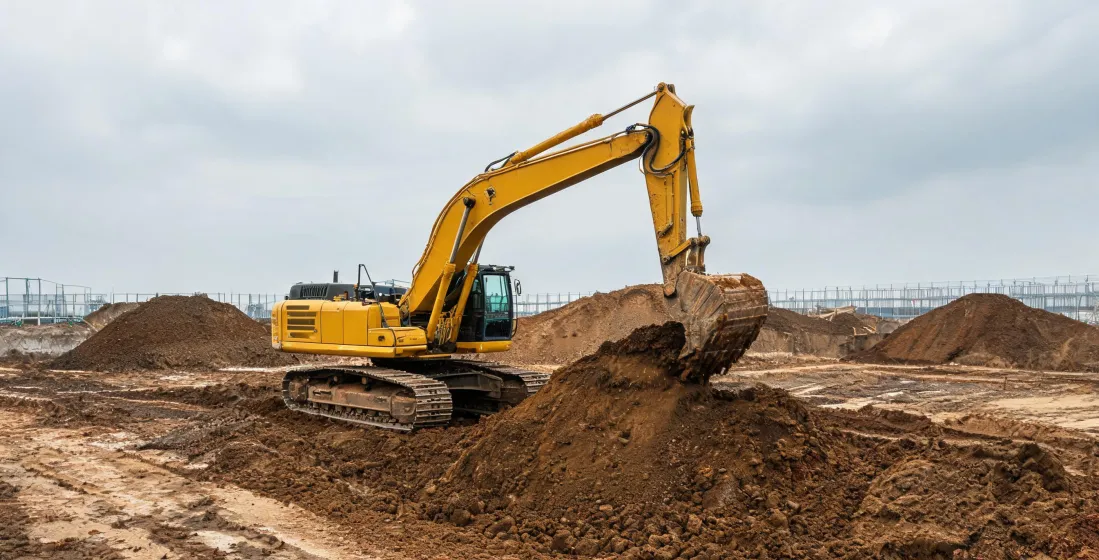
It Started with a Bad Batch
The container doors opened in a light drizzle, and I already knew the afternoon would be long. Fourteen 2.5-ton mini excavators sat in the depot yard with premature boom pin wear at under 400 hours. Our spec called for 3,000+ hours on those bushings under normal use. The machines carried our own private-label brand, so the failure belonged to us, not the factory.
I'm the quality and brand compliance manager at a compact equipment distributor in the Midwest. Translation: I review every machine that arrives under our brand before it's allowed to reach a customer. That day I was doing what's technically called "root-cause inspection" and effectively called damage control. The diagnosis: a hard-facing material spec we never verified when we signed the OEM agreement two years earlier. Rework cost us about $21,000 and strained two dealer relationships.
That failure changed how I approach OEM vetting. And it pushed us into the market for a new mini excavator OEM partner—a search that ended with SANY, but not for the reasons you might expect.
Why We Needed a New Mini Excavator OEM
Some context. We're not a giant national dealer group. We sell around 400 compact units a year through twelve locations, mostly to contractors and fleet owners. We're too small for a direct factory arrangement with the top-tier global brands, but too large to ignore private-label manufacturing. Our price point sits in the value segment, which is exactly why the lowest quote looked so attractive.
In the weeks after that yard inspection, we shortlisted four OEM candidates. One premium Japanese brand politely declined to do private-label. That left a low-cost assembler, a mid-tier producer, and SANY. I'll focus on the cheapest option and SANY, because those two audits taught me the most.
It's tempting to think you can compare unit prices, paint colors, and warranty years on a spreadsheet. This process taught me why that's oversimplified.
The Tempting Low-Cost Bid (and the Audit That Killed It)
Let's call the low-cost company Unitrac—not their real name. Their sales manager sent over a spec sheet that was basically a mirror image of our requirements, quoted 19% below SANY. The follow-up pitch was consistent:
We will put your name on anything. Any color, any decal. No problem.
That flexibility sounds like a feature, honestly. It stops sounding like one when you realize "no problem" is easy to say before the problem exists.
Three weeks later, our senior engineer and I walked the Unitrac facility. The showroom was clean and the sample machines looked sharp. But the quality system underneath was absent.
First red flag: torque verification. They showed us a drawer of signed assembly checklists, but the dates weren't sequential and no checklist linked to a specific machine serial number. I asked for the assembly record of one unit. Blank look. "We don't track by serial for those checks," the production manager said. For a compact excavator, that's disqualifying. Every pivot pin and hydraulic fitting matters.
Second red flag: paperwork. Their export manager showed us a CE certificate covering a different model prefix than the machines they were shipping. His explanation: "Same machine, older name. Nobody checks." Somebody checks. That's me.
I've been in quality work for about six years. I've audited maybe 31 factories—could be 29 or 30, I'd have to pull the records. The spreadsheet said Unitrac would save us $460 per unit on a 40-unit order: roughly $18,400. My gut said we'd pay it back in warranty claims. After the hard-facing fiasco, I wasn't in the mood to test that theory.
What I Actually Found at SANY's Mini Excavator Line
I walked into SANY's compact excavator production area expecting to be unimpressed. I'm not proud of that bias, but I'll keep it honest: in my mental file, "big Chinese manufacturer" and "process discipline" hadn't always been synonymous. The visit corrected it.
We toured the SY26 and SY35 lines. The robots were expected. What caught my attention was traceability. Every structural boom gets a serial number at the fabrication stage, and that number is linked to the welding robot's parameters—wire feed speed, amperage, interpass temperature. If a weld cracks on a customer's machine, SANY can pull up exactly how that specific boom was welded.
I asked to see a sample traceability report. The QC rep generated one for a random unit from three weeks earlier, on the spot. That's just a query in their system, but the fact that he could do it instantly told me the data was actually used, not just collected.
They also showed me their random teardown program: every shift, one complete unit is pulled from the line and measured against spec. I asked about pivot pin tolerance. "Plus or minus 0.01 millimeter," the QC lead said. I checked the procedure notes on their system later. It matched.
Then we discussed private-label. SANY will OEM for distributors: your livery, your decals, approved component substitutions. What they won't do is alter structural or hydraulic specs. If you want a 20% different auxiliary flow on a 2.5-ton machine, the answer is no. For me, that was the best sign. An OEM that knows what it won't do is an OEM that knows what it's building.
The Honest Part: Where SANY Fits and Where It Doesn't
We signed the private-label agreement in April 2025. The first batch—42 units across the 2.5-ton and 3.5-ton classes—arrived in June with our colors on them. Nine months in, warranty claim rates are noticeably lower than the previous product line. I can't share exact figures because the rollout isn't fully closed, but the direction is clear.
Now the honest part. I'm a quality inspector, not an evangelist. SANY was right for us. It won't be right for every distributor, and saying that is exactly why this recommendation might be worth listening to.
SANY makes sense as a mini excavator OEM partner when you want a full-line relationship—mini excavators now, backhoe loaders or wheel loaders later, with the same quality infrastructure behind each. Because SANY is also a backhoe manufacturer and a full-line equipment producer, starting with mini excavators leaves room to expand your private-label lineup later, without launching a brand-new supplier audit from scratch. It also makes sense if your order volume is realistic for that level of process—in our experience, roughly 15 or more units per model per year—and if you're comfortable with an OEM that enforces standard specs rather than bending them for every request.
I'd hesitate before recommending SANY if your business depends on truly tiny quantities (under five units per model), where the fixed cost of that discipline doesn't pay off. I'd also hesitate if you need deep structural or hydraulic customization, because they simply won't do it. And if your only competitive metric is the lowest upfront price, Unitrac stayed cheaper on paper. You can find lower quotes elsewhere. You'll just be absorbing more risk.
That's been my experience so far. Your situation may be different, which is kind of the point.
What to Audit Before You Sign an OEM Agreement
Consider this section your mini excavator distributor buying guide in miniature. Four checks that actually saved us:
- Ask what happens to the data. If a factory can show you a serial-level traceability report, they're running a quality system. If they show you a drawer of clipboards, you become the quality department.
- Verify the certificate against the actual machine. Take the model number off a unit on the showroom floor and cross-check it against the CE, EPA, or regional certification documents. If the prefixes don't match, the certificate is decoration.
- Get parts commitment in writing. How many years will the OEM guarantee service parts? What's the lead time? Most buyers focus on unit price and completely miss this—until a machine sits idle for four weeks waiting on a $40 seal.
- Know the difference between private label and bespoke. If you want your logo on a proven platform, a manufacturer like SANY works well. If you want a truly unique machine, find a specialist and budget for your own validation work.
And if you're considering becoming a SANY excavator dealer rather than an OEM buyer, ask the same questions about the dealer program. What training does the factory require? What parts stocking commitments? What response-time guarantees? In this industry, support quality is product quality.
Boring Is a Compliment
Eighteen months after that rainy yard inspection, the same yard manager stopped me and called the new units boring. No major warranty calls, no spec surprises, no unplanned container-door moments. I took it as the best professional compliment I've received in years.
There's no perfect OEM and no universal best. What there is, is a most suitable partner for your situation. The first time around, the price sheet made the decision for us. The second time, the quality system made it. If you're choosing a mini excavator OEM, make sure you're auditing the second thing, not just the first.
Charlotte Avery is an earth-moving machinery analyst covering excavators, mini excavators, loaders, skid steers, dozers, graders, compactors, and attachments. She uses ISO 6165 machine classification and ISO 20474-1 safety requirements while examining operating mass, rated payload, breakout force, ground pressure, stability, visibility, guarding, and attachment compatibility. Her work helps contractors and fleet buyers match machine size, undercarriage, transport limits, and protective features to terrain, duty cycle, and jobsite access.